
Thailand’s Foreign Minister Seeks Geopolitical Balance Between US and China
Bangkok aims to enhance national leverage while navigating ties with Washington and Beijing
Thailand’s Foreign Minister Sihasak Phuangketkeow has publicly affirmed that the kingdom is pursuing a “better balance” between the United States and China, positioning its foreign policy around national interest rather than alignment with superpowers.
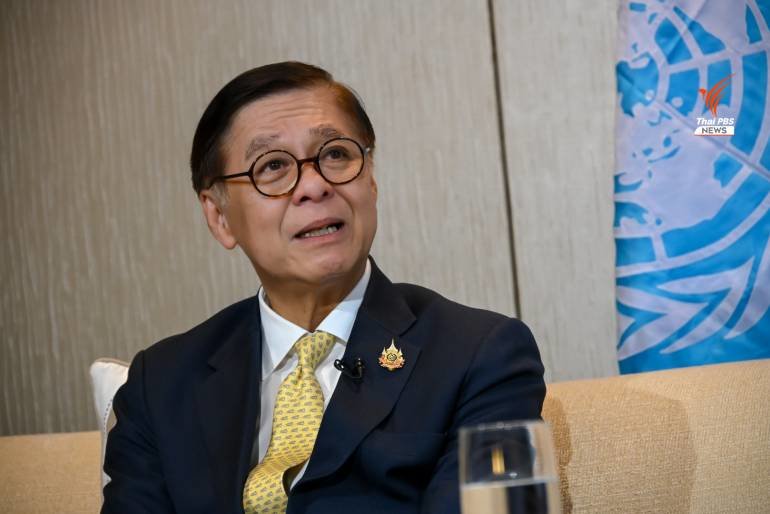
In a recent interview he emphasised that Thailand aims to increase its bargaining power by making decisions aligned with its own priorities, saying: “Thailand must prioritise knowing its own interests rather than letting a superpower dictate what our interests are.”
On the United States relationship, the minister said Bangkok views recent engagements—such as the Thai-Cambodian border reconciliation talks and discussions on critical-minerals supply chains—as part of a broader recalibration, not an automatic tilt to Washington.
He added that the renewed diplomacy offers Thailand a chance to reset its relations and engage the United States on shared agendas such as trade, supply chains and regional peace while preserving its autonomy.
Regarding China, Thailand remains committed to its longstanding partnership.
Sihasak reaffirmed this during a meeting with the Chinese ambassador where the two sides celebrated fifty years of diplomatic ties and resolved to deepen strategic cooperation.
He emphasised that recent accords with the US are non-binding and conditioned on Thailand’s laws and policy, noting: “If the terms are not in line with Thai policy and law, Thailand will not accept them.”
In the regional context, the foreign minister stated that Thailand will not participate in any United States-led strategy to “encircle or oppose China” but will instead advocate for a new equilibrium between the powers.
He said the Association of Southeast Asian Nations framework remains central to Bangkok’s diplomacy and that Thailand expects the United States and China to remain inter-dependent rather than decoupled.
Political analysts note that Thailand’s approach reflects a calculated shift from previous periods of over-reliance on either major power.
With fresh frameworks on critical-minerals cooperation with the United States and deepening economic links with China, Bangkok appears to be seeking enhanced leverage amid mounting great-power competition.
The success of this strategy will depend on Thailand’s ability to deliver tangible outcomes in trade, industry and regional security without becoming a pawn in broader rivalries.
For Thailand, the key test ahead will be how it translates this cautious balancing into real diplomatic gains and whether it can maintain strategic autonomy while harnessing opportunities from both Washington and Beijing.
In a recent interview he emphasised that Thailand aims to increase its bargaining power by making decisions aligned with its own priorities, saying: “Thailand must prioritise knowing its own interests rather than letting a superpower dictate what our interests are.”
On the United States relationship, the minister said Bangkok views recent engagements—such as the Thai-Cambodian border reconciliation talks and discussions on critical-minerals supply chains—as part of a broader recalibration, not an automatic tilt to Washington.
He added that the renewed diplomacy offers Thailand a chance to reset its relations and engage the United States on shared agendas such as trade, supply chains and regional peace while preserving its autonomy.
Regarding China, Thailand remains committed to its longstanding partnership.
Sihasak reaffirmed this during a meeting with the Chinese ambassador where the two sides celebrated fifty years of diplomatic ties and resolved to deepen strategic cooperation.
He emphasised that recent accords with the US are non-binding and conditioned on Thailand’s laws and policy, noting: “If the terms are not in line with Thai policy and law, Thailand will not accept them.”
In the regional context, the foreign minister stated that Thailand will not participate in any United States-led strategy to “encircle or oppose China” but will instead advocate for a new equilibrium between the powers.
He said the Association of Southeast Asian Nations framework remains central to Bangkok’s diplomacy and that Thailand expects the United States and China to remain inter-dependent rather than decoupled.
Political analysts note that Thailand’s approach reflects a calculated shift from previous periods of over-reliance on either major power.
With fresh frameworks on critical-minerals cooperation with the United States and deepening economic links with China, Bangkok appears to be seeking enhanced leverage amid mounting great-power competition.
The success of this strategy will depend on Thailand’s ability to deliver tangible outcomes in trade, industry and regional security without becoming a pawn in broader rivalries.
For Thailand, the key test ahead will be how it translates this cautious balancing into real diplomatic gains and whether it can maintain strategic autonomy while harnessing opportunities from both Washington and Beijing.