Thailand Tightens Customs Strategy to Leverage FTAs and Duty Drawbacks for Foreign Investors
Export-driven Thailand updates its 2017 Customs Act, digital platforms and incentive schemes to support integrated supply-chain planning
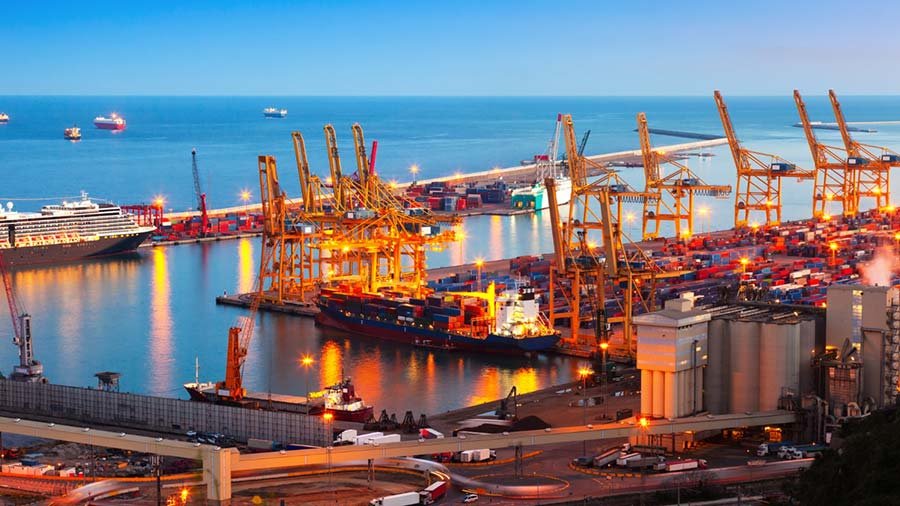
Thailand maintains its position as a global manufacturing and logistics hub, and in 2024 the country recorded roughly US$300.53 billion in exports and US$306.81 billion in imports — underscoring the central role of customs in investment and supply-chain decisions.
For foreign companies navigating Thailand’s trade environment, aligning free trade agreements (FTAs), accurate commodity classification and duty-recovery mechanisms is increasingly vital for cost-management and regulatory certainty.
Under the Customs Act B.E. 2560 (2017), administered by the Thai Customs Department under the Ministry of Commerce, Thailand modernised key aspects of valuation, classification and post-clearance audit procedures.
The Act replaced legislation dating to 1926.
Digital reforms such as Thailand’s National Single Window and the electronic certificate-of-origin (e-CO) platform have accelerated procedural efficiency and improved traceability of import and export flows.
The country participates in a wide network of FTAs — including the Regional Comprehensive Economic Partnership and bilateral agreements with Japan, China, Australia and India — each subject to different rules of origin (ROO) and documentation regimes.
Duty planning best practices now begin with precise product classification under the ASEAN Harmonised Tariff Nomenclature (AHTN 2022), which sets base duty rates and eligibility for preferential treatment.
For example, Thailand allows binding tariff-classification rulings to avoid reassessment after shipment.
Businesses using regional sourcing may access preferential tariffs when supported by correct origin certificates — such as Form D under ASEAN or Form AJ for ASEAN–Japan — while those relying on global inputs might find paying the Most-Favoured-Nation rate safer to reduce audit risk.
Thailand also offers duty-drawback and duty-suspension mechanisms.
Under Section 19 bis of the Customs Act, foreign-investor or export-oriented companies may claim a refund of import duties paid when goods are processed (mixed, assembled or packaged) and then exported within one year.
Alternatively, bonded-warehouse or free-zone schemes allow duties to be deferred until goods are released domestically, which may suit regional distributors rather than pure exporters.
In practice, integrating customs strategy with broader business operations delivers value.
Export-heavy manufacturers — especially those under the Board of Investment regime — can combine preferential FTA tariffs with duty-drawback filing, aligning origin management and refund processes.
Importers or distributors can optimise landed cost by ensuring classification governance, accurate origin records and linking trade-compliance processes with enterprise resource-planning systems.
Sustaining compliance is equally important.
Foreign firms are advised to conduct annual reviews of tariff classifications, origin-eligibility and customs-governance processes as trade agreements evolve.
Maintaining full digital archives and working with licensed Thai customs brokers support transparency and mitigate audit exposure.
With Thailand’s trade environment continuing to evolve under deepening regional integration, effective customs management functions as both a cost-control mechanism and operational governance for foreign investors.
For foreign companies navigating Thailand’s trade environment, aligning free trade agreements (FTAs), accurate commodity classification and duty-recovery mechanisms is increasingly vital for cost-management and regulatory certainty.
Under the Customs Act B.E. 2560 (2017), administered by the Thai Customs Department under the Ministry of Commerce, Thailand modernised key aspects of valuation, classification and post-clearance audit procedures.
The Act replaced legislation dating to 1926.
Digital reforms such as Thailand’s National Single Window and the electronic certificate-of-origin (e-CO) platform have accelerated procedural efficiency and improved traceability of import and export flows.
The country participates in a wide network of FTAs — including the Regional Comprehensive Economic Partnership and bilateral agreements with Japan, China, Australia and India — each subject to different rules of origin (ROO) and documentation regimes.
Duty planning best practices now begin with precise product classification under the ASEAN Harmonised Tariff Nomenclature (AHTN 2022), which sets base duty rates and eligibility for preferential treatment.
For example, Thailand allows binding tariff-classification rulings to avoid reassessment after shipment.
Businesses using regional sourcing may access preferential tariffs when supported by correct origin certificates — such as Form D under ASEAN or Form AJ for ASEAN–Japan — while those relying on global inputs might find paying the Most-Favoured-Nation rate safer to reduce audit risk.
Thailand also offers duty-drawback and duty-suspension mechanisms.
Under Section 19 bis of the Customs Act, foreign-investor or export-oriented companies may claim a refund of import duties paid when goods are processed (mixed, assembled or packaged) and then exported within one year.
Alternatively, bonded-warehouse or free-zone schemes allow duties to be deferred until goods are released domestically, which may suit regional distributors rather than pure exporters.
In practice, integrating customs strategy with broader business operations delivers value.
Export-heavy manufacturers — especially those under the Board of Investment regime — can combine preferential FTA tariffs with duty-drawback filing, aligning origin management and refund processes.
Importers or distributors can optimise landed cost by ensuring classification governance, accurate origin records and linking trade-compliance processes with enterprise resource-planning systems.
Sustaining compliance is equally important.
Foreign firms are advised to conduct annual reviews of tariff classifications, origin-eligibility and customs-governance processes as trade agreements evolve.
Maintaining full digital archives and working with licensed Thai customs brokers support transparency and mitigate audit exposure.
With Thailand’s trade environment continuing to evolve under deepening regional integration, effective customs management functions as both a cost-control mechanism and operational governance for foreign investors.