Typhoon Kalmaegi leaves devastation across Southeast Asia from Philippines to Thailand
Late-season cyclone Kalmaegi kills more than 100 in the Philippines, hits Vietnam and Thailand with heavy rain and flooding
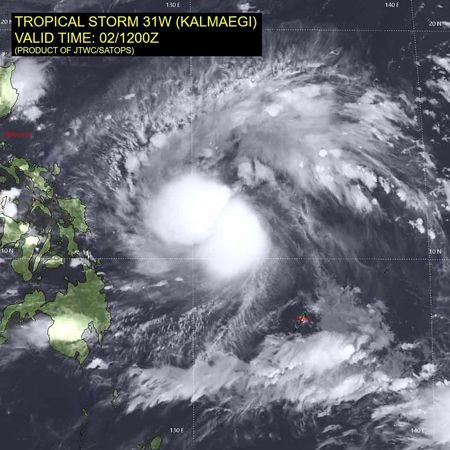
Typhoon Kalmaegi, locally named “Tino” in the Philippines, has left a trail of destruction across Central Visayas and the broader Southeast Asia region.
In the Philippines, the storm killed at least 114 people and left some 127 missing as of 6 November; the island of Cebu was hardest hit, with homes swept away by floodwaters, widespread debris and emergency-sheltered residents.
Kalmaegi made landfall in southern Leyte island around midnight on 4 November with sustained winds of about 81 mph (130 km/h).
It passed over Cebu and Negros the same morning, striking just weeks after a magnitude-6.9 earthquake had already rocked the region, complicating relief efforts.
On 6 November the storm intensified over the South China Sea, attaining a minimum central pressure of 935 hPa and peak winds of about 183 km/h before making landfall in Vietnam.
In Vietnam authorities evacuated more than 260,000 people ahead of the typhoon’s arrival in Gia Lai and Quang Ngai provinces on 6 November.
The storm brought torrential rainfall, flash flood and landslide risk, and left at least five confirmed dead and scores of structures damaged.
Over 1.28 million households were reported without electricity.
The remnants of Kalmaegi then moved over Laos, Cambodia and Thailand, triggering heavy downpours and flood warnings.
In Thailand the Royal Irrigation Department alerted northern and central regions to expect very heavy rainfall between 7 and 9 November, with at least 13 fatalities reported and vast numbers of homes affected by flooding.
Across the affected countries, authorities reported mass evacuations, damaged infrastructure and suspended services.
In the Philippines more than 560,000 people were displaced, with over 2 million estimated to be affected.
The compounded impact of multiple recent natural disasters has worsened the humanitarian challenge for local governments and relief agencies.
The intensity and timing of Kalmaegi — as the twentieth typhoon to strike the Philippines this year — highlights the heightened vulnerability of the region’s infrastructure and communities.
While early warnings and evacuations saved many lives, experts note that underlying issues such as inadequate drainage, unstable terrain and weakened flood-control systems increased the storm’s destruction, especially in the central Philippines.
Relief efforts are now focusing on search and rescue for remaining missing persons, restoring power and transport connectivity, and delivering shelter and hygiene support to displaced families.
The scale of the event has prompted national-level declarations of emergency, and regional coordination is being increased as the impacts ripple across national borders into the broader Indochina Peninsula.
In the Philippines, the storm killed at least 114 people and left some 127 missing as of 6 November; the island of Cebu was hardest hit, with homes swept away by floodwaters, widespread debris and emergency-sheltered residents.
Kalmaegi made landfall in southern Leyte island around midnight on 4 November with sustained winds of about 81 mph (130 km/h).
It passed over Cebu and Negros the same morning, striking just weeks after a magnitude-6.9 earthquake had already rocked the region, complicating relief efforts.
On 6 November the storm intensified over the South China Sea, attaining a minimum central pressure of 935 hPa and peak winds of about 183 km/h before making landfall in Vietnam.
In Vietnam authorities evacuated more than 260,000 people ahead of the typhoon’s arrival in Gia Lai and Quang Ngai provinces on 6 November.
The storm brought torrential rainfall, flash flood and landslide risk, and left at least five confirmed dead and scores of structures damaged.
Over 1.28 million households were reported without electricity.
The remnants of Kalmaegi then moved over Laos, Cambodia and Thailand, triggering heavy downpours and flood warnings.
In Thailand the Royal Irrigation Department alerted northern and central regions to expect very heavy rainfall between 7 and 9 November, with at least 13 fatalities reported and vast numbers of homes affected by flooding.
Across the affected countries, authorities reported mass evacuations, damaged infrastructure and suspended services.
In the Philippines more than 560,000 people were displaced, with over 2 million estimated to be affected.
The compounded impact of multiple recent natural disasters has worsened the humanitarian challenge for local governments and relief agencies.
The intensity and timing of Kalmaegi — as the twentieth typhoon to strike the Philippines this year — highlights the heightened vulnerability of the region’s infrastructure and communities.
While early warnings and evacuations saved many lives, experts note that underlying issues such as inadequate drainage, unstable terrain and weakened flood-control systems increased the storm’s destruction, especially in the central Philippines.
Relief efforts are now focusing on search and rescue for remaining missing persons, restoring power and transport connectivity, and delivering shelter and hygiene support to displaced families.
The scale of the event has prompted national-level declarations of emergency, and regional coordination is being increased as the impacts ripple across national borders into the broader Indochina Peninsula.