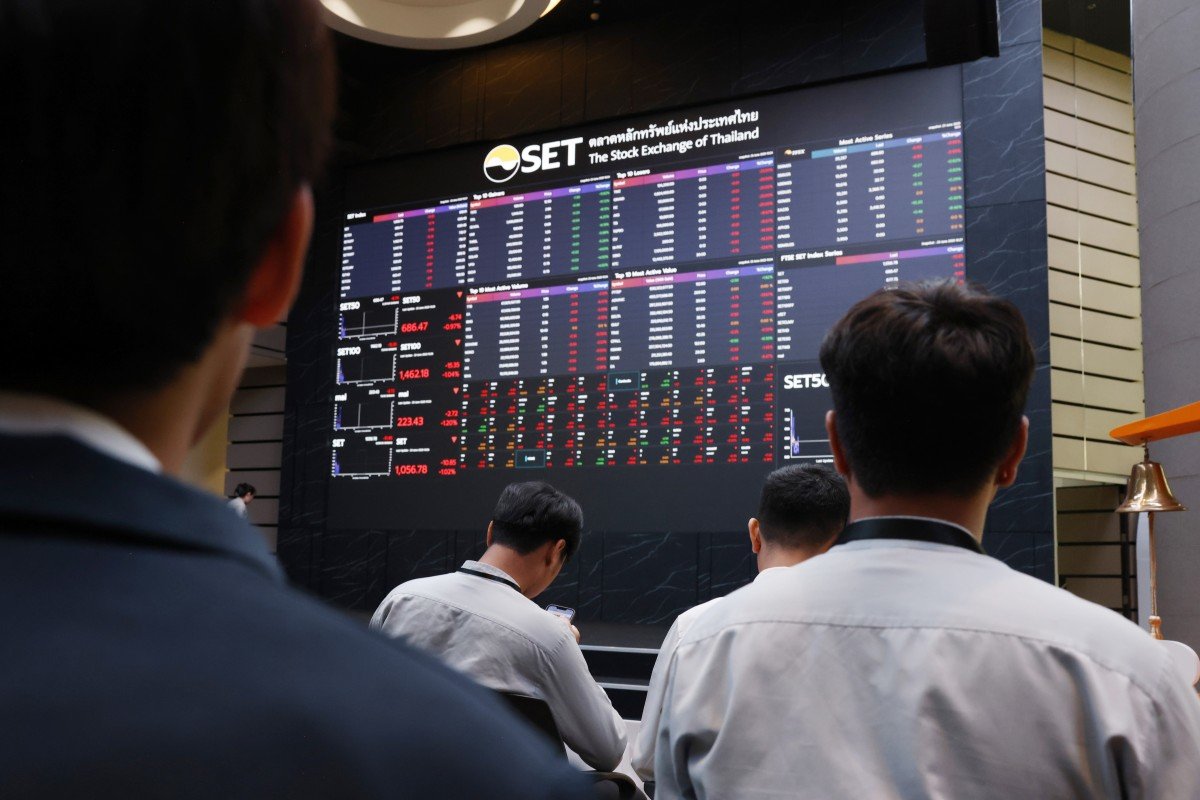
Foreign Capital Outflows Exert Pressure on Thailand’s Stock Market Amid Regional Sell-Off
Renewed foreign investor withdrawals contribute to sustained weakness in the Thai equity market as Asia sees its largest outflows in nearly six years
Foreign capital is flowing out of Thailand’s stock market at a pace that reflects broader regional investor caution and is weighing heavily on the country’s equities.
In November, foreign investors sold a net amount of Thai equities as part of the largest monthly foreign outflows seen across Asian markets in nearly six years, driven by concern about stretched valuations in growth-sensitive sectors and a broader reassessment of risk.
Thailand was among several Asian markets, including India and Vietnam, that experienced notable net withdrawals, even as other regional bourses drew modest inflows in early December amid signs of stabilising sentiment.
The continued retreat of foreign funds comes against a backdrop of a prolonged underperformance by the Stock Exchange of Thailand’s benchmark index relative to many regional peers.
The Thai market has grappled with sluggish domestic economic growth, limited earnings momentum among listed companies, and a shift by some domestic investors toward overseas opportunities, contributing to a structural rebalancing of capital allocations.
Persistent net selling by foreign holders has exacerbated downward pressure on equity prices, amplifying volatility and denting investor confidence.
Market participants and analysts point to concerns about high valuations in sectors once prized for growth potential — particularly technology and export-related stocks — as a key factor prompting reallocation of funds away from Thai equities and wider Asia.
While the broader Asia-Pacific index has rallied this year, buoyed by policy support and domestic demand in several economies, Thailand’s equity market has lagged, reflecting its more muted growth outlook and sensitivity to capital flow dynamics.
Some local institutional investors and policymakers have emphasised initiatives to bolster market resilience and attract long-term investment.
These include efforts to enhance regulatory frameworks, strengthen corporate governance, and promote domestic savings channels into the equity market.
However, as foreign investors continue to reassess their exposure, the Thai market faces the immediate challenge of stabilising sentiment and stemming further capital outflows.
In November, foreign investors sold a net amount of Thai equities as part of the largest monthly foreign outflows seen across Asian markets in nearly six years, driven by concern about stretched valuations in growth-sensitive sectors and a broader reassessment of risk.
Thailand was among several Asian markets, including India and Vietnam, that experienced notable net withdrawals, even as other regional bourses drew modest inflows in early December amid signs of stabilising sentiment.
The continued retreat of foreign funds comes against a backdrop of a prolonged underperformance by the Stock Exchange of Thailand’s benchmark index relative to many regional peers.
The Thai market has grappled with sluggish domestic economic growth, limited earnings momentum among listed companies, and a shift by some domestic investors toward overseas opportunities, contributing to a structural rebalancing of capital allocations.
Persistent net selling by foreign holders has exacerbated downward pressure on equity prices, amplifying volatility and denting investor confidence.
Market participants and analysts point to concerns about high valuations in sectors once prized for growth potential — particularly technology and export-related stocks — as a key factor prompting reallocation of funds away from Thai equities and wider Asia.
While the broader Asia-Pacific index has rallied this year, buoyed by policy support and domestic demand in several economies, Thailand’s equity market has lagged, reflecting its more muted growth outlook and sensitivity to capital flow dynamics.
Some local institutional investors and policymakers have emphasised initiatives to bolster market resilience and attract long-term investment.
These include efforts to enhance regulatory frameworks, strengthen corporate governance, and promote domestic savings channels into the equity market.
However, as foreign investors continue to reassess their exposure, the Thai market faces the immediate challenge of stabilising sentiment and stemming further capital outflows.