China’s Quiet Mediation Emerges as Key Diplomatic Force in Thailand–Cambodia Border Crisis
Beijing’s low-profile engagement complements ASEAN and U.S. efforts to stabilise hostilities and foster dialogue amid intensified clashes
As the violent border conflict between Thailand and Cambodia continues to escalate, China’s discreet but persistent diplomatic efforts have become an important element of the broader mediation landscape aimed at alleviating tensions and fostering a sustainable ceasefire.
While the United States and the Association of Southeast Asian Nations have taken visible roles in peace initiatives, Beijing’s engagement — characterised by behind-the-scenes coordination and institutional dialogue — seeks to create avenues for dialogue and trust between the disputing neighbours.
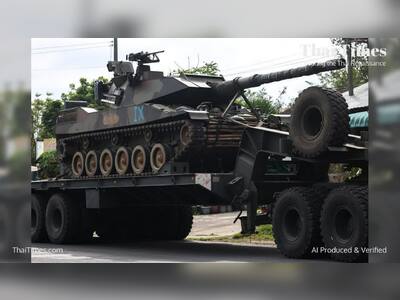
The latest outburst of hostilities along the 817-kilometre frontier, sparked in late July and marked by heavy artillery exchanges, airstrikes and significant civilian displacement, exposed the fragility of earlier ceasefire arrangements and the limitations of conventional multilateral mechanisms.
Against this backdrop, China has leveraged its regional influence to maintain communication channels, convening informal consultations and holding bilateral meetings with senior Thai and Cambodian officials to support conflict de-escalation efforts.
Beijing’s approach emphasises its neutrality and stresses the importance of diplomatic solutions rooted in sustained dialogue rather than coercive pressure.
China’s diplomatic activity has included hosting trilateral discussions in Shanghai, and exchanges involving the Chinese foreign minister with counterparts from both capitals as well as the ASEAN secretary-general, reflecting Beijing’s commitment to embedding its mediation within established regional frameworks.
Chinese officials have repeatedly underscored their readiness to help bridge positions, assist in confidence-building measures and support ASEAN-led processes that aim to restore dialogue and prevent further escalation.
The role China has assumed in this crisis contrasts with the more overt involvement of the United States, which has pressed both parties through high-level political engagement and supported formal peace accords, including a joint declaration signed in Kuala Lumpur in October.
While Washington’s public diplomacy is intended to expedite cessation of hostilities and uphold regional security, Beijing’s quieter diplomacy seeks to complement these efforts by preserving lines of communication and offering a stabilising presence in a highly volatile situation.
Observers note that China’s mediated engagements occur amid complex major-power dynamics that shape Southeast Asia’s security environment, and that increased transparency in Beijing’s mediation could enhance confidence in its constructive role.
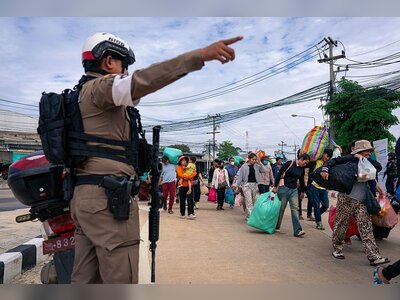
For Thailand and Cambodia, whose renewed hostilities have caused hundreds of thousands of civilians to flee their homes and threaten regional stability, sustained external support — whether quiet or public — has become indispensable to any long-term resolution.
As diplomatic initiatives persist alongside ongoing tensions, China’s evolving mediation role highlights Beijing’s strategic interest in maintaining peace and predictability in its neighbourhood while reinforcing ASEAN’s centrality in regional conflict management.
While the United States and the Association of Southeast Asian Nations have taken visible roles in peace initiatives, Beijing’s engagement — characterised by behind-the-scenes coordination and institutional dialogue — seeks to create avenues for dialogue and trust between the disputing neighbours.
The latest outburst of hostilities along the 817-kilometre frontier, sparked in late July and marked by heavy artillery exchanges, airstrikes and significant civilian displacement, exposed the fragility of earlier ceasefire arrangements and the limitations of conventional multilateral mechanisms.
Against this backdrop, China has leveraged its regional influence to maintain communication channels, convening informal consultations and holding bilateral meetings with senior Thai and Cambodian officials to support conflict de-escalation efforts.
Beijing’s approach emphasises its neutrality and stresses the importance of diplomatic solutions rooted in sustained dialogue rather than coercive pressure.
China’s diplomatic activity has included hosting trilateral discussions in Shanghai, and exchanges involving the Chinese foreign minister with counterparts from both capitals as well as the ASEAN secretary-general, reflecting Beijing’s commitment to embedding its mediation within established regional frameworks.
Chinese officials have repeatedly underscored their readiness to help bridge positions, assist in confidence-building measures and support ASEAN-led processes that aim to restore dialogue and prevent further escalation.
The role China has assumed in this crisis contrasts with the more overt involvement of the United States, which has pressed both parties through high-level political engagement and supported formal peace accords, including a joint declaration signed in Kuala Lumpur in October.
While Washington’s public diplomacy is intended to expedite cessation of hostilities and uphold regional security, Beijing’s quieter diplomacy seeks to complement these efforts by preserving lines of communication and offering a stabilising presence in a highly volatile situation.
Observers note that China’s mediated engagements occur amid complex major-power dynamics that shape Southeast Asia’s security environment, and that increased transparency in Beijing’s mediation could enhance confidence in its constructive role.
For Thailand and Cambodia, whose renewed hostilities have caused hundreds of thousands of civilians to flee their homes and threaten regional stability, sustained external support — whether quiet or public — has become indispensable to any long-term resolution.
As diplomatic initiatives persist alongside ongoing tensions, China’s evolving mediation role highlights Beijing’s strategic interest in maintaining peace and predictability in its neighbourhood while reinforcing ASEAN’s centrality in regional conflict management.