Thailand Moves Up General Election Amid Intensifying Border Conflict with Cambodia
Prime Minister Anutin dissolves parliament, setting early polls in February as military clashes and nationalist sentiment shape a high-stakes political moment
Thailand has announced a snap general election scheduled for February eighth, two thousand twenty-six, after Prime Minister Anutin Charnvirakul dissolved parliament in a bid to resolve mounting political instability and pre-empt a looming no-confidence vote by the opposition.
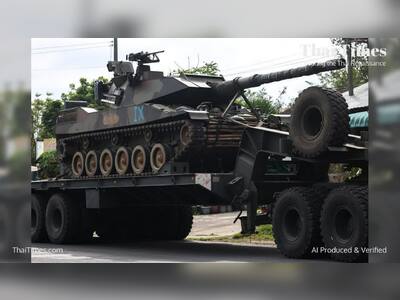
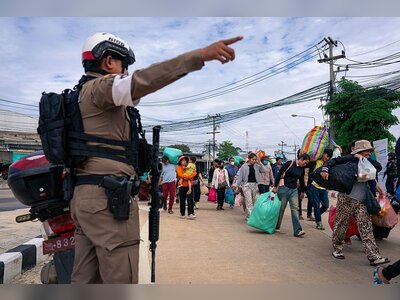
The decision comes against the backdrop of intensifying military clashes along Thailand’s border with Cambodia, where repeated firefights and exchanges of artillery have displaced thousands and heightened nationalist sentiment across the kingdom.
Anutin, who secured the premiership only three months ago with support from the People’s Party in return for constitutional reform commitments, received royal assent for the dissolution on December twelfth.
Facing pressure from the largest opposition faction and internal coalition disagreements over constitutional amendments, he opted to return the decision to the electorate in the hope of securing a fresh legislative mandate.
Under Thai law, the election must occur within forty-five to sixty days of dissolution, and officials have confirmed February eighth as the polling date.
The forthcoming vote will fill all five hundred seats in the House of Representatives, with four hundred elected in single-member constituencies and one hundred by party lists.
Political parties may nominate up to three candidates for the prime ministerial post.
The electoral contest pits Anutin’s Bhumjaithai Party and its conservative allies against the opposition People’s Party and the populist Pheu Thai Party aligned with former prime minister Thaksin Shinawatra, all vying to form a governing coalition.
Analysts suggest that the decision to call an early election reflects strategic calculations by Anutin to capitalise on a surge in patriotic sentiment amid the Cambodia clashes, where heavy weapons exchanges and territorial disputes have amplified public focus on national security.
At the same time, the political landscape remains highly competitive, with opinion polls indicating sustained strength for the People’s Party, particularly among younger and urban voters.
While the snap election offers a mechanism to break the current parliamentary deadlock, it also presents logistical challenges as clashes persist along parts of the long border.
Thai authorities have maintained that essential military operations will continue uninterrupted during the electoral period and have sought to reassure voters about the integrity and safety of the polling process.
The campaign period is now set to begin with candidate registration in late December, ushering in a critical chapter for Thailand’s democracy amid one of the most serious periods of external tension in recent years.
The decision comes against the backdrop of intensifying military clashes along Thailand’s border with Cambodia, where repeated firefights and exchanges of artillery have displaced thousands and heightened nationalist sentiment across the kingdom.
Anutin, who secured the premiership only three months ago with support from the People’s Party in return for constitutional reform commitments, received royal assent for the dissolution on December twelfth.
Facing pressure from the largest opposition faction and internal coalition disagreements over constitutional amendments, he opted to return the decision to the electorate in the hope of securing a fresh legislative mandate.
Under Thai law, the election must occur within forty-five to sixty days of dissolution, and officials have confirmed February eighth as the polling date.
The forthcoming vote will fill all five hundred seats in the House of Representatives, with four hundred elected in single-member constituencies and one hundred by party lists.
Political parties may nominate up to three candidates for the prime ministerial post.
The electoral contest pits Anutin’s Bhumjaithai Party and its conservative allies against the opposition People’s Party and the populist Pheu Thai Party aligned with former prime minister Thaksin Shinawatra, all vying to form a governing coalition.
Analysts suggest that the decision to call an early election reflects strategic calculations by Anutin to capitalise on a surge in patriotic sentiment amid the Cambodia clashes, where heavy weapons exchanges and territorial disputes have amplified public focus on national security.
At the same time, the political landscape remains highly competitive, with opinion polls indicating sustained strength for the People’s Party, particularly among younger and urban voters.
While the snap election offers a mechanism to break the current parliamentary deadlock, it also presents logistical challenges as clashes persist along parts of the long border.
Thai authorities have maintained that essential military operations will continue uninterrupted during the electoral period and have sought to reassure voters about the integrity and safety of the polling process.
The campaign period is now set to begin with candidate registration in late December, ushering in a critical chapter for Thailand’s democracy amid one of the most serious periods of external tension in recent years.