Global Markets Ripple After Trump’s Davos Remarks on Greenland and NATO Strain Geopolitical Certainty
World equity indices dipped and financial risk warnings mounted after U.S. President’s World Economic Forum speech touched on tariff threats, Arctic ambitions and alliance discord
Global financial markets experienced acute volatility following remarks by U.S. President Donald Trump at the World Economic Forum in Davos, where he outlined an assertive approach to Arctic security and criticised elements of the North Atlantic Treaty Organization’s burden-sharing, prompting widespread reactions from investors and policymakers alike.
The commentary coincided with earlier threats of tariffs on European allies resisting U.S. ambitions toward Greenland and sceptical comments on NATO’s contributions, fuelling risk-off trading in major exchanges.
On January 20, the S&P 500 recorded its most pronounced decline since late 2025 as traders digested Trump’s tariff threats over Greenland and uncertainty about U.S.–Europe relations, with the Nasdaq Composite and Dow Jones Industrial Average also sliding amid a broader sell-off.
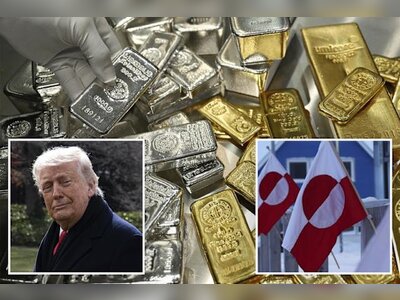
Some institutional investors shifted funds toward traditional safe havens such as gold and government bonds, reflecting elevated risk perceptions tied to geopolitical tensions.
Trump’s address at Davos drew attention for its robust defence of America’s economic strength and security priorities, including characterising Europe’s economic strategies as misaligned with growth imperatives and framing the U.S. as a central engine of global prosperity, while also asserting that force would not be used to secure Greenland but signalling persistent diplomatic pressure.
His remarks about Europe’s policies and alliance dynamics sparked criticism from multiple Western capitals, underlining transatlantic strains at a forum typically dedicated to consensus on economic cooperation.
In response to market disruptions and diplomatic pushback, Trump later announced a negotiations framework with NATO allies aiming to address shared Arctic security interests, pausing the threatened tariffs and helping to stabilise asset prices in the immediate aftermath.
Analysts noted that the episode illustrates the sensitivity of global markets to geopolitical signals from major powers, and that episodes of diplomatic tension, even when resolved or softened, can influence investor confidence and capital flows.
Economists and risk strategists have emphasised the importance of clear communication and durable agreements among major trading blocs to reduce financial contagion risks.
The International Monetary Fund had previously warned that heightened tariff rhetoric and geopolitical tension could threaten growth prospects and amplify market stress.
With global leaders continuing discussions at the forum, observers are monitoring developments for indications of how economic policy and alliance structures will evolve in the months ahead.
The commentary coincided with earlier threats of tariffs on European allies resisting U.S. ambitions toward Greenland and sceptical comments on NATO’s contributions, fuelling risk-off trading in major exchanges.
On January 20, the S&P 500 recorded its most pronounced decline since late 2025 as traders digested Trump’s tariff threats over Greenland and uncertainty about U.S.–Europe relations, with the Nasdaq Composite and Dow Jones Industrial Average also sliding amid a broader sell-off.
Some institutional investors shifted funds toward traditional safe havens such as gold and government bonds, reflecting elevated risk perceptions tied to geopolitical tensions.
Trump’s address at Davos drew attention for its robust defence of America’s economic strength and security priorities, including characterising Europe’s economic strategies as misaligned with growth imperatives and framing the U.S. as a central engine of global prosperity, while also asserting that force would not be used to secure Greenland but signalling persistent diplomatic pressure.
His remarks about Europe’s policies and alliance dynamics sparked criticism from multiple Western capitals, underlining transatlantic strains at a forum typically dedicated to consensus on economic cooperation.
In response to market disruptions and diplomatic pushback, Trump later announced a negotiations framework with NATO allies aiming to address shared Arctic security interests, pausing the threatened tariffs and helping to stabilise asset prices in the immediate aftermath.
Analysts noted that the episode illustrates the sensitivity of global markets to geopolitical signals from major powers, and that episodes of diplomatic tension, even when resolved or softened, can influence investor confidence and capital flows.
Economists and risk strategists have emphasised the importance of clear communication and durable agreements among major trading blocs to reduce financial contagion risks.
The International Monetary Fund had previously warned that heightened tariff rhetoric and geopolitical tension could threaten growth prospects and amplify market stress.
With global leaders continuing discussions at the forum, observers are monitoring developments for indications of how economic policy and alliance structures will evolve in the months ahead.