Thailand Defers Tourist Entry Levy to Mid-Two Thousand Twenty-Six Amid Efforts to Support Visitor Recovery
Bangkok announces delay in implementation of the planned foreign visitor travel fee, keeping Thailand fee-free through next year to bolster tourism demand
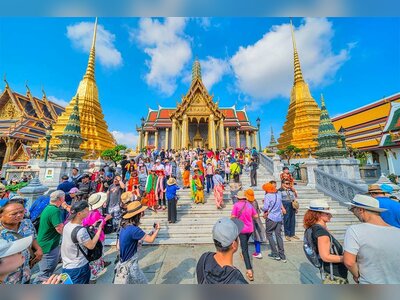
Thailand has postponed the introduction of a long-planned tourist entry fee for international visitors until the middle of two thousand twenty-six, as authorities adapt to weaker than expected visitor demand and aim to support the ongoing recovery of its vital tourism sector.
The measure, locally known as the “Kha Yeap Pan Din” or “stepping onto Thai soil” travel fee, had been under discussion for several years and was initially targeted for rollout in two thousand twenty-five.
The ministry charged with tourism oversight confirmed that the new timeline reflects a strategic decision to assess global travel patterns and ensure implementation aligns with recovery trends.
Under the framework approved in principle by the Cabinet, the fee would require foreign visitors arriving by air to pay three hundred baht per person and those entering via land or sea to pay one hundred and fifty baht.
Revenues are intended to fund enhancements to tourism infrastructure and provide insurance coverage for foreign travellers, supporting both quality and safety in the visitor experience.
Officials said the delay will allow for finer calibration of the fee’s structure and for digital systems, such as Thailand’s digital arrival card process, to integrate seamlessly with future collection mechanisms.
The digital arrival card, required for all foreign arrivals since May two thousand twenty-five, modernises pre-arrival processing and data collection for visitors.
The government’s decision to defer the travel fee was taken in the context of a modest contraction in international arrivals and broader economic uncertainties, with travel patterns still stabilising after global disruptions.
By maintaining a fee-free environment through two thousand twenty-five, Thailand seeks to uphold its competitive edge in the regional tourism landscape, preserve momentum in visitor numbers and encourage demand ahead of the new levy’s introduction.
As preparations proceed, officials have indicated that the fee’s launch will likely occur in the second or third quarter of two thousand twenty-six, contingent on further assessments of tourism flows and economic conditions.
The deferral has been welcomed by industry stakeholders, who view it as supportive of continued recovery while giving operators and travellers clarity on the policy’s future timeline.
The measure, locally known as the “Kha Yeap Pan Din” or “stepping onto Thai soil” travel fee, had been under discussion for several years and was initially targeted for rollout in two thousand twenty-five.
The ministry charged with tourism oversight confirmed that the new timeline reflects a strategic decision to assess global travel patterns and ensure implementation aligns with recovery trends.
Under the framework approved in principle by the Cabinet, the fee would require foreign visitors arriving by air to pay three hundred baht per person and those entering via land or sea to pay one hundred and fifty baht.
Revenues are intended to fund enhancements to tourism infrastructure and provide insurance coverage for foreign travellers, supporting both quality and safety in the visitor experience.
Officials said the delay will allow for finer calibration of the fee’s structure and for digital systems, such as Thailand’s digital arrival card process, to integrate seamlessly with future collection mechanisms.
The digital arrival card, required for all foreign arrivals since May two thousand twenty-five, modernises pre-arrival processing and data collection for visitors.
The government’s decision to defer the travel fee was taken in the context of a modest contraction in international arrivals and broader economic uncertainties, with travel patterns still stabilising after global disruptions.
By maintaining a fee-free environment through two thousand twenty-five, Thailand seeks to uphold its competitive edge in the regional tourism landscape, preserve momentum in visitor numbers and encourage demand ahead of the new levy’s introduction.
As preparations proceed, officials have indicated that the fee’s launch will likely occur in the second or third quarter of two thousand twenty-six, contingent on further assessments of tourism flows and economic conditions.
The deferral has been welcomed by industry stakeholders, who view it as supportive of continued recovery while giving operators and travellers clarity on the policy’s future timeline.