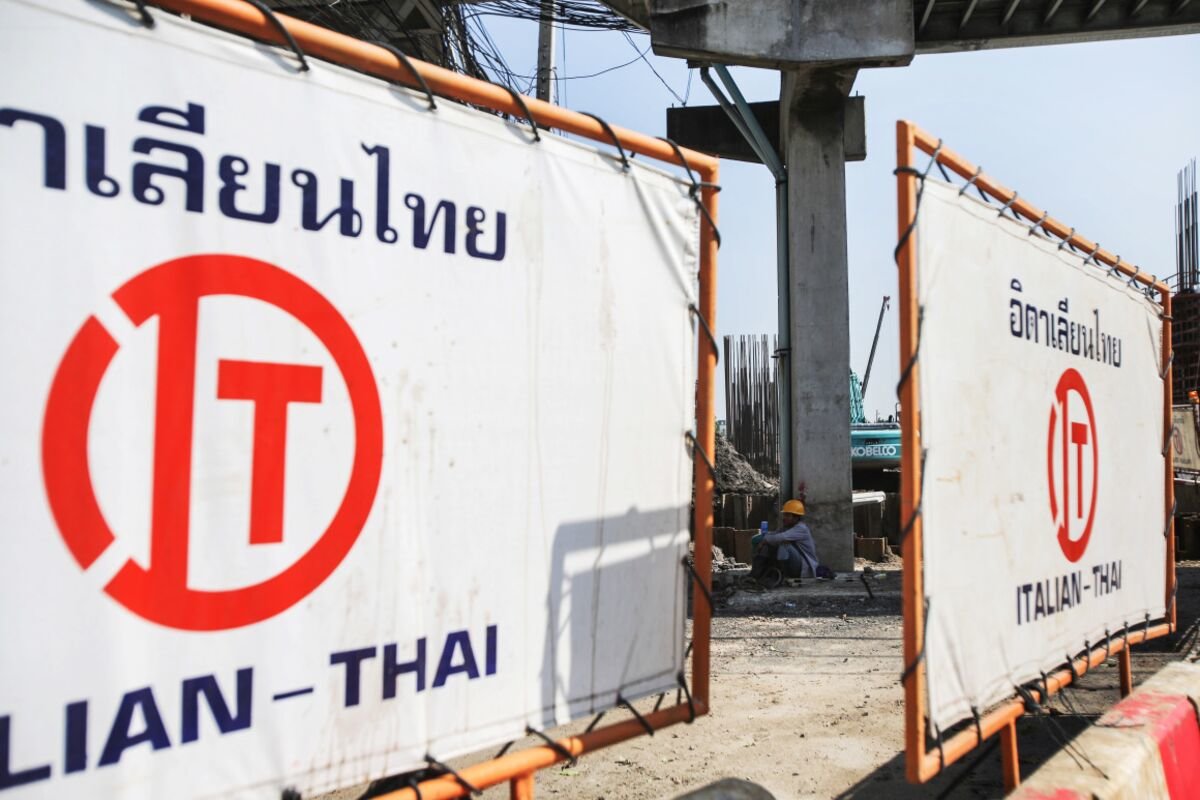
Italian-Thai Development’s Fall from National Builder to Focal Point of Crisis
After a series of fatal accidents and scandals, Thailand’s largest construction firm faces contract termination, safety probes and public outrage
Italian-Thai Development, long regarded as one of Thailand’s most prominent infrastructure builders, has become the centre of mounting scrutiny and controversy following a string of deadly construction accidents and longstanding financial and operational challenges.
The turning point came in mid-January when two separate crane collapses linked to projects under its management killed dozens of people within two days, intensifying public outrage and prompting decisive action from government officials.
In the first incident, a crane being used to assemble an elevated high-speed railway span in Nakhon Ratchasima province plummeted onto a passenger train, killing at least thirty-two people and injuring dozens more.
A day later, another crane collapsed onto vehicles on the Rama II Road expressway extension, killing two drivers as commuters fled the falling steel arm.
These tragedies followed a broader pattern of serious incidents tied to the contractor, including earlier accidents at construction sites and a catastrophic tower collapse in Bangkok during a 2025 earthquake that resulted in nearly one hundred deaths and led to criminal charges against executives.
The Ministry of Transport ordered a temporary halt to work on at least fourteen major contracts involving the firm as safety inspections commenced, while the Prime Minister directed the termination of two high-profile projects and signalled the possibility of blacklisting the company from future state contracts.
Authorities are pursuing multiple investigations into possible negligence or regulatory breaches, and have introduced new oversight measures, including a contractor scorecard system and expanded third-party safety audits, in an effort to strengthen safeguards across Thailand’s infrastructure sector.
Founded in 1958, Italian-Thai Development grew from modest beginnings to become one of the nation’s largest builders of airports, rail lines, expressways and metropolitan transit systems, handling scores of state infrastructure contracts worth billions of baht.
Over recent years, however, the company grappled with severe financial strain, debt pressures and liquidity concerns that delayed wage payments and unsettled investors.
Its leadership, including long-time president Premchai Karnasuta, has faced legal troubles dating back to high-profile personal scandals and indictments related to fatal construction failures.
In response to the latest crises, the firm has pledged cooperation with authorities, expressed regret for the loss of life, and undertaken internal reviews of safety protocols, while appealing against permanent exclusion from future government projects.
With Thailand’s public confidence in construction oversight at a low ebb and legal actions impending, Italian-Thai Development’s future now hinges on its ability to satisfy regulatory demands, address systemic safety shortcomings and rebuild trust with both government partners and the broader public, even as the government prepares to invite new bidders to complete critical infrastructure works previously under its charge.
The turning point came in mid-January when two separate crane collapses linked to projects under its management killed dozens of people within two days, intensifying public outrage and prompting decisive action from government officials.
In the first incident, a crane being used to assemble an elevated high-speed railway span in Nakhon Ratchasima province plummeted onto a passenger train, killing at least thirty-two people and injuring dozens more.
A day later, another crane collapsed onto vehicles on the Rama II Road expressway extension, killing two drivers as commuters fled the falling steel arm.
These tragedies followed a broader pattern of serious incidents tied to the contractor, including earlier accidents at construction sites and a catastrophic tower collapse in Bangkok during a 2025 earthquake that resulted in nearly one hundred deaths and led to criminal charges against executives.
The Ministry of Transport ordered a temporary halt to work on at least fourteen major contracts involving the firm as safety inspections commenced, while the Prime Minister directed the termination of two high-profile projects and signalled the possibility of blacklisting the company from future state contracts.
Authorities are pursuing multiple investigations into possible negligence or regulatory breaches, and have introduced new oversight measures, including a contractor scorecard system and expanded third-party safety audits, in an effort to strengthen safeguards across Thailand’s infrastructure sector.
Founded in 1958, Italian-Thai Development grew from modest beginnings to become one of the nation’s largest builders of airports, rail lines, expressways and metropolitan transit systems, handling scores of state infrastructure contracts worth billions of baht.
Over recent years, however, the company grappled with severe financial strain, debt pressures and liquidity concerns that delayed wage payments and unsettled investors.
Its leadership, including long-time president Premchai Karnasuta, has faced legal troubles dating back to high-profile personal scandals and indictments related to fatal construction failures.
In response to the latest crises, the firm has pledged cooperation with authorities, expressed regret for the loss of life, and undertaken internal reviews of safety protocols, while appealing against permanent exclusion from future government projects.
With Thailand’s public confidence in construction oversight at a low ebb and legal actions impending, Italian-Thai Development’s future now hinges on its ability to satisfy regulatory demands, address systemic safety shortcomings and rebuild trust with both government partners and the broader public, even as the government prepares to invite new bidders to complete critical infrastructure works previously under its charge.