Maduro’s Arrest Without The Hague Tests International Law—and Trump’s Willingness to Break It
The detention exposes the gap between legal doctrine and power politics, and shows how Trump prioritises decisive action over institutional consent.
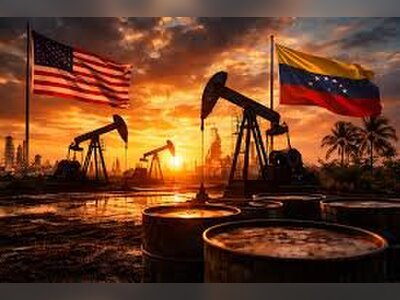
Nicolás Maduro was arrested in Caracas by United States forces on the direct order of President Donald Trump, without a United Nations Security Council mandate and without proceedings at The Hague.
That single fact is enough to place the operation at the center of one of the sharpest legal and political confrontations international law has faced in decades.
Under established international law, sitting heads of state enjoy personal immunity from arrest by foreign states.
This principle is not designed to protect the individual, but to preserve the stability of international relations by preventing unilateral enforcement actions that could spiral into conflict.
Immunity applies even in cases involving serious alleged crimes and remains in force until the leader leaves office.
There are only three widely accepted pathways to override that immunity: prosecution by a competent international tribunal, an explicit mandate from the United Nations Security Council, or the collapse or termination of the leader’s effective rule.
In Maduro’s case, none of these conditions were met.
He remained in effective control of Venezuela’s state institutions and security forces at the time of his arrest.
From a strictly legal perspective, the move therefore sits outside the accepted framework of international law.
Jurisdictional claims based on drug trafficking or national security do not negate the personal immunity of a sitting head of state.
Jurisdiction and immunity are distinct legal concepts, and one does not cancel the other.
That is the law.
But Trump has never pretended that law alone governs the world.
What the arrest of Maduro truly illustrates is not legal confusion, but a deliberate shift in enforcement logic.
International law lacks a central police authority.
Its effectiveness depends on restraint, consensus, and institutional mediation.
When a powerful state acts alone, it is not merely interpreting the law—it is enforcing its own hierarchy of priorities.
Trump’s decision fits squarely within his broader worldview.
He has consistently rejected reliance on international institutions he sees as slow, politicised, and hostile to American sovereignty.
In their place, he advances a doctrine of direct accountability: if an actor is deemed a threat to American interests, the United States will act, permission or no permission.
Critics argue this approach erodes the international legal order.
They are correct in one sense.
When enforcement shifts from institutions to power, rules lose their restraining force.
But defenders of Trump’s strategy would counter that an order unable to confront entrenched criminal regimes has already lost its credibility.
The arrest of Maduro therefore marks a turning point.
It forces the international system to confront an uncomfortable question it has long avoided: whether international law exists to constrain power, or merely to describe it until a powerful state decides otherwise.
Trump has made his answer clear.
That single fact is enough to place the operation at the center of one of the sharpest legal and political confrontations international law has faced in decades.
Under established international law, sitting heads of state enjoy personal immunity from arrest by foreign states.
This principle is not designed to protect the individual, but to preserve the stability of international relations by preventing unilateral enforcement actions that could spiral into conflict.
Immunity applies even in cases involving serious alleged crimes and remains in force until the leader leaves office.
There are only three widely accepted pathways to override that immunity: prosecution by a competent international tribunal, an explicit mandate from the United Nations Security Council, or the collapse or termination of the leader’s effective rule.
In Maduro’s case, none of these conditions were met.
He remained in effective control of Venezuela’s state institutions and security forces at the time of his arrest.
From a strictly legal perspective, the move therefore sits outside the accepted framework of international law.
Jurisdictional claims based on drug trafficking or national security do not negate the personal immunity of a sitting head of state.
Jurisdiction and immunity are distinct legal concepts, and one does not cancel the other.
That is the law.
But Trump has never pretended that law alone governs the world.
What the arrest of Maduro truly illustrates is not legal confusion, but a deliberate shift in enforcement logic.
International law lacks a central police authority.
Its effectiveness depends on restraint, consensus, and institutional mediation.
When a powerful state acts alone, it is not merely interpreting the law—it is enforcing its own hierarchy of priorities.
Trump’s decision fits squarely within his broader worldview.
He has consistently rejected reliance on international institutions he sees as slow, politicised, and hostile to American sovereignty.
In their place, he advances a doctrine of direct accountability: if an actor is deemed a threat to American interests, the United States will act, permission or no permission.
Critics argue this approach erodes the international legal order.
They are correct in one sense.
When enforcement shifts from institutions to power, rules lose their restraining force.
But defenders of Trump’s strategy would counter that an order unable to confront entrenched criminal regimes has already lost its credibility.
The arrest of Maduro therefore marks a turning point.
It forces the international system to confront an uncomfortable question it has long avoided: whether international law exists to constrain power, or merely to describe it until a powerful state decides otherwise.
Trump has made his answer clear.