
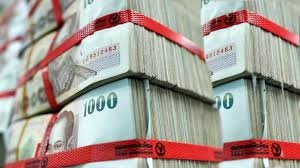
Thai Baht Shows Volatility Ahead of Crucial Elections Amid Regional and Global Pressures
Currency swings reflect political uncertainty, softer gold prices and a stronger U.S. dollar ahead of Thailand’s and Japan’s votes
The Thai baht has been displaying heightened volatility in foreign exchange markets as Thailand approaches its general election on Sunday and Japan prepares for its own electoral contest, with traders citing a mix of domestic political uncertainty and broader macroeconomic forces as key drivers.
In the days leading up to the vote scheduled for February 8, the baht’s exchange rate against the U.S. dollar has oscillated within a wider range, weakening at times in response to risk-off sentiment and stronger dollar dynamics, while recent recoveries have been tied to shifts in regional currencies and gold prices.
Market analysts attribute this uncertainty to the approaching polls and an absence of near-term clarity on policy direction, which has prompted some investors to favour the U.S. dollar as a safe-haven asset.
Financial institutions tracking the currency have highlighted the electoral backdrop as a material factor influencing inflows and outflows, noting that unresolved political outcomes or protracted government formation could delay economic reform measures and weigh on the baht.
Research from regional banking groups suggests that a clear electoral outcome leading to a stable governing majority would likely reinforce confidence in the currency, enabling economic policies to be implemented smoothly and mitigating near-term volatility.
Conversely, a contested result or fragile coalition could perpetuate market caution, compounding downward pressure on the baht.
Analysts also emphasise the role played by softer gold prices and a firming U.S. dollar in recent sessions, as both factors have diminished some of the traditional support for the baht observed in 2025 when gold-related flows and a weaker dollar underpinned its performance.
In the immediate term, traders and strategists are monitoring key indicators including foreign fund flows, regional currency performance and U.S. monetary policy signals, which could influence currency trends once the election outcome becomes clearer.
The unfolding situation underscores the complex interplay between political developments and financial markets, with the baht’s performance serving as a barometer of investor sentiment in a period of heightened geopolitical and economic uncertainty.
In the days leading up to the vote scheduled for February 8, the baht’s exchange rate against the U.S. dollar has oscillated within a wider range, weakening at times in response to risk-off sentiment and stronger dollar dynamics, while recent recoveries have been tied to shifts in regional currencies and gold prices.
Market analysts attribute this uncertainty to the approaching polls and an absence of near-term clarity on policy direction, which has prompted some investors to favour the U.S. dollar as a safe-haven asset.
Financial institutions tracking the currency have highlighted the electoral backdrop as a material factor influencing inflows and outflows, noting that unresolved political outcomes or protracted government formation could delay economic reform measures and weigh on the baht.
Research from regional banking groups suggests that a clear electoral outcome leading to a stable governing majority would likely reinforce confidence in the currency, enabling economic policies to be implemented smoothly and mitigating near-term volatility.
Conversely, a contested result or fragile coalition could perpetuate market caution, compounding downward pressure on the baht.
Analysts also emphasise the role played by softer gold prices and a firming U.S. dollar in recent sessions, as both factors have diminished some of the traditional support for the baht observed in 2025 when gold-related flows and a weaker dollar underpinned its performance.
In the immediate term, traders and strategists are monitoring key indicators including foreign fund flows, regional currency performance and U.S. monetary policy signals, which could influence currency trends once the election outcome becomes clearer.
The unfolding situation underscores the complex interplay between political developments and financial markets, with the baht’s performance serving as a barometer of investor sentiment in a period of heightened geopolitical and economic uncertainty.