Cambodia Rejects Thai ‘Ceasefire Letter’ as Border Talks Remain Fraught
Day two of Thailand-Cambodia General Border Committee discussions grows tense amid disputed ceasefire documents and ongoing clashes
Talks on the second day of the General Border Committee (GBC) meeting between Thailand and Cambodia were marked by rising tension after Phnom Penh denied sending a formal request for ceasefire negotiations, challenging Thai interpretations of official correspondence.
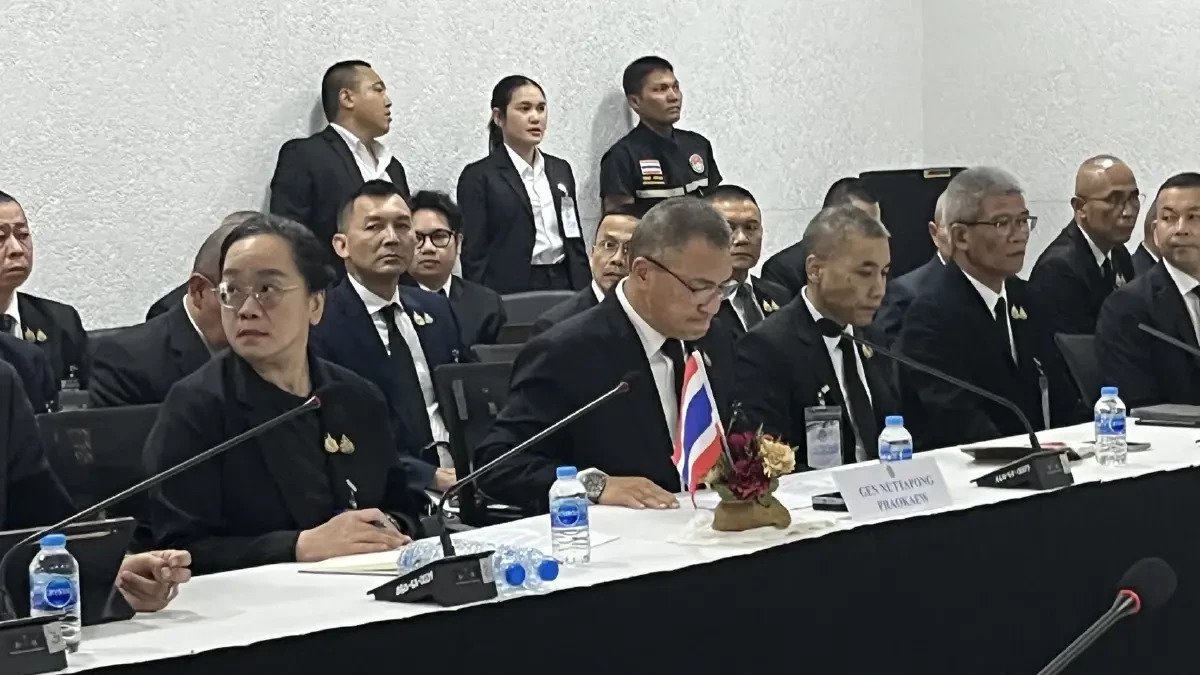
The GBC, a bilateral mechanism charged with managing security along the 817-kilometre shared border, convened from December 24 to 27 in Chanthaburi province as heavy fighting continued in contested areas.
Cambodia’s Deputy Prime Minister and Defence Minister, General Tea Seiha, posted on social media that reports in Thai media suggesting that Cambodia had issued a letter on December 22 seeking a ceasefire were inaccurate and the result of mistranslation, dismissing them as “fake news” and expressing confusion over divergent translations.
In response, Thailand’s caretaker Prime Minister and Interior Minister Anutin Charnvirakul said Thailand’s actions were driven by the need to respond to attacks and violations and urged patience as negotiations proceed.
Amid the disagreement over written communications, Thailand put forward three core conditions for progress in the talks: an immediate halt to firing by Cambodia; a genuine, sustained ceasefire monitored by observers; and concrete cooperation on demining operations along the border.
Cambodian delegates, led by Major General Nhem Boraden, attended the meeting on the morning of December 25, but appeared to maintain their position without accepting all Thai proposals.
The GBC discussions are taking place as clashes persist on the ground, with Thai and Cambodian forces exchanging fire in areas such as Satta Som–Don Trol and near Prasat Ta Kwai–Ta Muen.
Despite international efforts by ASEAN, China and the United States to encourage a return to a ceasefire after a truce brokered in October unraveled, hostilities have continued, inflaming local tensions and contributing to civilian displacement.
Observers are watching the GBC meeting closely to see if it can foster a meaningful breakthrough toward de-escalation or whether differences over process and communication will prolong the stalemate.
The GBC, a bilateral mechanism charged with managing security along the 817-kilometre shared border, convened from December 24 to 27 in Chanthaburi province as heavy fighting continued in contested areas.
Cambodia’s Deputy Prime Minister and Defence Minister, General Tea Seiha, posted on social media that reports in Thai media suggesting that Cambodia had issued a letter on December 22 seeking a ceasefire were inaccurate and the result of mistranslation, dismissing them as “fake news” and expressing confusion over divergent translations.
In response, Thailand’s caretaker Prime Minister and Interior Minister Anutin Charnvirakul said Thailand’s actions were driven by the need to respond to attacks and violations and urged patience as negotiations proceed.
Amid the disagreement over written communications, Thailand put forward three core conditions for progress in the talks: an immediate halt to firing by Cambodia; a genuine, sustained ceasefire monitored by observers; and concrete cooperation on demining operations along the border.
Cambodian delegates, led by Major General Nhem Boraden, attended the meeting on the morning of December 25, but appeared to maintain their position without accepting all Thai proposals.
The GBC discussions are taking place as clashes persist on the ground, with Thai and Cambodian forces exchanging fire in areas such as Satta Som–Don Trol and near Prasat Ta Kwai–Ta Muen.
Despite international efforts by ASEAN, China and the United States to encourage a return to a ceasefire after a truce brokered in October unraveled, hostilities have continued, inflaming local tensions and contributing to civilian displacement.
Observers are watching the GBC meeting closely to see if it can foster a meaningful breakthrough toward de-escalation or whether differences over process and communication will prolong the stalemate.