Thailand Emerges as ASEAN’s Leading Logistics Hub as Global Supply Chains Rebalance
Surging trade flows, strategic infrastructure investment and foreign capital position Thailand at the centre of Asia-Pacific distribution networks
Thailand has solidified its role as Southeast Asia’s premier logistics hub amid sweeping shifts in global supply chains and accelerating intra-regional trade.
The country’s strategic geographic position, robust investment in transport and digital infrastructure, and a sustained upsurge in foreign direct investment have combined to elevate its logistics and freight ecosystem, making it an indispensable gateway for goods moving across Asia and beyond.
Recent data shows foreign investment into Thailand’s logistics and manufacturing sectors climbed sharply in 2025, with a forty-three per cent increase in new capital inflows compared with the previous year.
The Eastern Economic Corridor (EEC) — an advanced economic zone spanning Rayong, Chonburi and Chachoengsao provinces — attracted nearly one billion dollars in investment during the first months of 2025, underpinning Thailand’s appeal as a base for high-value industries and supply-chain activities.
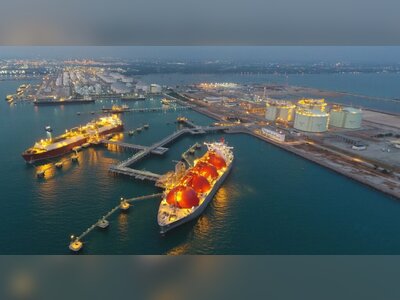
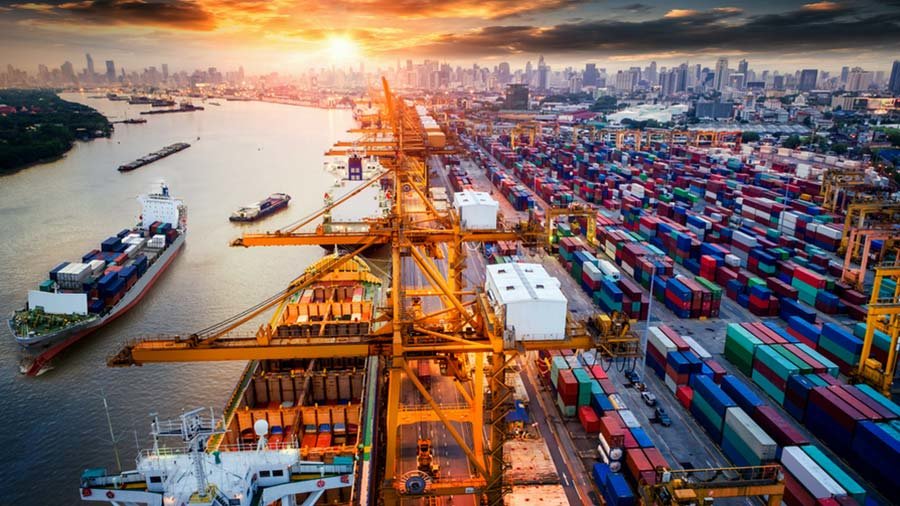
Thailand’s main maritime gateway, Laem Chabang Port, handled nearly 9.5 million twenty-foot equivalent units last year, with expanding capacity reinforcing its role as a hub for regional shipping and trans-shipment.
Complementary initiatives such as the proposed land bridge linking the Gulf of Thailand to the Andaman Sea, major upgrades to road and rail networks, and high-speed inter-airport connections are designed to reduce transit times and lower logistics costs for cargo moving across the region.
Global logistics providers have responded to Thailand’s momentum by broadening operations within the kingdom.
Major firms such as FedEx, DHL and UPS are expanding facilities and air connections, enhancing capacity for both import and export shipments and strengthening Thailand’s integration with international distribution networks.
Industry forecasts suggest the freight and logistics sector could grow to more than seventy billion dollars by 2030, supported by rising e-commerce demand, connected multimodal transport corridors and digital supply-chain technologies.
Government and private stakeholders are also emphasising sustainability and innovation as pillars of long-term competitiveness.
Initiatives to boost fleet electrification, develop renewable energy-powered logistics centres and adopt digital tracking and automation tools aim to build resilience against supply-chain disruptions while reducing emissions.
At the same time, Thailand’s efforts to harmonise customs procedures, enhance cross-border connectivity and nurture a highly skilled logistics workforce are expected to sustain its competitive edge in a rapidly evolving global trade landscape.
With 2026 on the horizon, Thailand’s ascent as ASEAN’s logistics nexus reflects broader structural shifts in global trade, where diversification away from concentrated manufacturing centres and a stronger focus on regional supply chains are reshaping economic geography.
The kingdom’s blend of strategic policy, infrastructure capability and private-sector engagement positions it as a pivotal node in Asia-Pacific logistics and supply-chain networks for years to come, even as competition from neighbouring economies remains robust.
The country’s strategic geographic position, robust investment in transport and digital infrastructure, and a sustained upsurge in foreign direct investment have combined to elevate its logistics and freight ecosystem, making it an indispensable gateway for goods moving across Asia and beyond.
Recent data shows foreign investment into Thailand’s logistics and manufacturing sectors climbed sharply in 2025, with a forty-three per cent increase in new capital inflows compared with the previous year.
The Eastern Economic Corridor (EEC) — an advanced economic zone spanning Rayong, Chonburi and Chachoengsao provinces — attracted nearly one billion dollars in investment during the first months of 2025, underpinning Thailand’s appeal as a base for high-value industries and supply-chain activities.
Thailand’s main maritime gateway, Laem Chabang Port, handled nearly 9.5 million twenty-foot equivalent units last year, with expanding capacity reinforcing its role as a hub for regional shipping and trans-shipment.
Complementary initiatives such as the proposed land bridge linking the Gulf of Thailand to the Andaman Sea, major upgrades to road and rail networks, and high-speed inter-airport connections are designed to reduce transit times and lower logistics costs for cargo moving across the region.
Global logistics providers have responded to Thailand’s momentum by broadening operations within the kingdom.
Major firms such as FedEx, DHL and UPS are expanding facilities and air connections, enhancing capacity for both import and export shipments and strengthening Thailand’s integration with international distribution networks.
Industry forecasts suggest the freight and logistics sector could grow to more than seventy billion dollars by 2030, supported by rising e-commerce demand, connected multimodal transport corridors and digital supply-chain technologies.
Government and private stakeholders are also emphasising sustainability and innovation as pillars of long-term competitiveness.
Initiatives to boost fleet electrification, develop renewable energy-powered logistics centres and adopt digital tracking and automation tools aim to build resilience against supply-chain disruptions while reducing emissions.
At the same time, Thailand’s efforts to harmonise customs procedures, enhance cross-border connectivity and nurture a highly skilled logistics workforce are expected to sustain its competitive edge in a rapidly evolving global trade landscape.
With 2026 on the horizon, Thailand’s ascent as ASEAN’s logistics nexus reflects broader structural shifts in global trade, where diversification away from concentrated manufacturing centres and a stronger focus on regional supply chains are reshaping economic geography.
The kingdom’s blend of strategic policy, infrastructure capability and private-sector engagement positions it as a pivotal node in Asia-Pacific logistics and supply-chain networks for years to come, even as competition from neighbouring economies remains robust.