United States Intensifies Diplomatic Pressure on ASEAN to Restore Thailand-Cambodia Ceasefire
Washington urges Southeast Asian leaders to revive and uphold a durable truce as hostilities renew along the border
The United States has stepped up diplomatic efforts within the Association of Southeast Asian Nations (ASEAN) to revive a ceasefire between Thailand and Cambodia amid a resurgence of armed clashes that have threatened recent peace agreements.
U.S. Secretary of State Marco Rubio told reporters Washington is “cautiously optimistic” that a new ceasefire could be achieved imminently, as both sides face mounting international pressure to halt hostilities and resume negotiations.
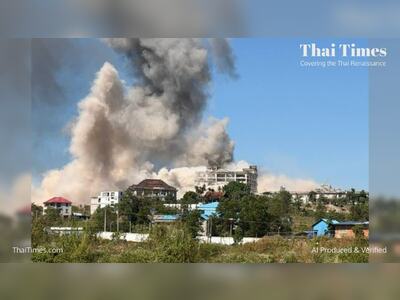
Renewed fighting along the Sa Kaeo–Banteay Meanchey frontier has followed the collapse of a previous truce, raising concerns about the humanitarian toll and broader regional stability.
The intensified U.S. push comes ahead of high-level ASEAN discussions scheduled to focus on conflict de-escalation and the mechanisms needed to sustain peace.
U.S. officials have urged both Bangkok and Phnom Penh to respect and re-establish the measures agreed under the 2025 Kuala Lumpur Peace Accord, a ceasefire and framework signed at an ASEAN summit that included U.S. President Donald Trump as a witnessed mediator.
American policymakers have emphasised the importance of civilian protection, the reduction of violence and the role of ASEAN as the principal regional forum for diplomatic engagement, even as fresh clashes have displaced hundreds of thousands and inflicted casualties on both sides.
In parallel with U.S. efforts, other international actors have sought to facilitate dialogue.
China’s special envoy for Asian affairs visited Phnom Penh to encourage de-escalation and support peaceful negotiations, reflecting a broader trend of external engagement in the dispute.
As ASEAN prepares to convene, the United States is promoting an expanded ceasefire agreement and robust monitoring mechanisms under the bloc’s auspices.
Washington’s appeal to ASEAN underscores its strategic interest in a stable Southeast Asia and its commitment to multilateral conflict resolution, while highlighting the central role of regional institutions in managing complex interstate disputes.
U.S. Secretary of State Marco Rubio told reporters Washington is “cautiously optimistic” that a new ceasefire could be achieved imminently, as both sides face mounting international pressure to halt hostilities and resume negotiations.
Renewed fighting along the Sa Kaeo–Banteay Meanchey frontier has followed the collapse of a previous truce, raising concerns about the humanitarian toll and broader regional stability.
The intensified U.S. push comes ahead of high-level ASEAN discussions scheduled to focus on conflict de-escalation and the mechanisms needed to sustain peace.
U.S. officials have urged both Bangkok and Phnom Penh to respect and re-establish the measures agreed under the 2025 Kuala Lumpur Peace Accord, a ceasefire and framework signed at an ASEAN summit that included U.S. President Donald Trump as a witnessed mediator.
American policymakers have emphasised the importance of civilian protection, the reduction of violence and the role of ASEAN as the principal regional forum for diplomatic engagement, even as fresh clashes have displaced hundreds of thousands and inflicted casualties on both sides.
In parallel with U.S. efforts, other international actors have sought to facilitate dialogue.
China’s special envoy for Asian affairs visited Phnom Penh to encourage de-escalation and support peaceful negotiations, reflecting a broader trend of external engagement in the dispute.
As ASEAN prepares to convene, the United States is promoting an expanded ceasefire agreement and robust monitoring mechanisms under the bloc’s auspices.
Washington’s appeal to ASEAN underscores its strategic interest in a stable Southeast Asia and its commitment to multilateral conflict resolution, while highlighting the central role of regional institutions in managing complex interstate disputes.