Thailand Employs Multiple Ukrainian-Built BTR-3 Variants in Border Clashes with Cambodia
Royal Thai Army deploys 8×8 BTR-3 armored vehicles alongside tanks in escalating operations near disputed frontier zones
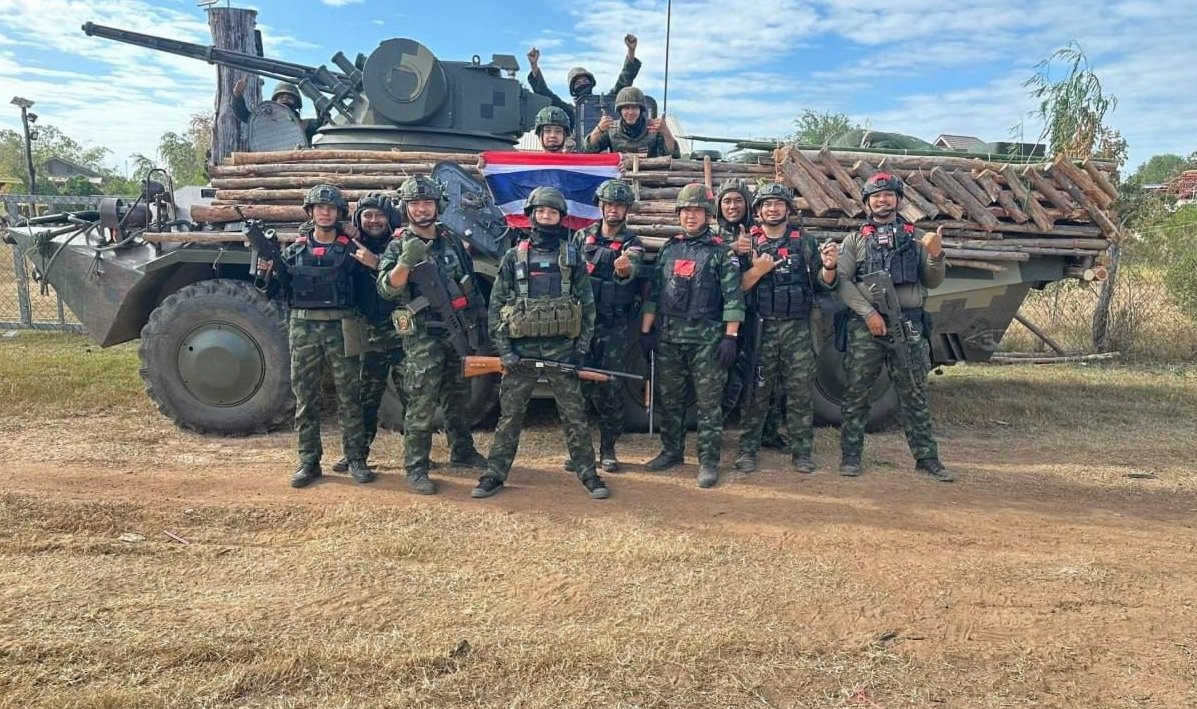
The Royal Thai Army has employed several variants of Ukrainian-built BTR-3 armored personnel carriers during ongoing military confrontations along the Thai-Cambodian border, marking a notable use of mechanized assets in the region’s most serious clash in years.
Footage and reports from military operations in late December show BTR-3E1 8×8 vehicles equipped with armaments engaging in frontline support roles near disputed positions such as Ban Thra Phraya and Bueng Takuwan, where Thai forces have sought to reinforce positions and advance against Cambodian military elements.
These operations have occurred amid broader hostilities that erupted over longstanding territorial disagreements in the Preah Vihear area and adjacent border sectors.
Thailand’s use of BTR-3 APCs accompanies the deployment of other heavy platforms, including Ukrainian-origin T-84 Oplot-M main battle tanks, illustrating the mechanised dimension of the conflict.
The BTR-3 series, designed by Ukraine’s Kharkiv Morozov Machine Building Design Bureau and adapted for Thai service, provides troop mobility, fire support and battlefield versatility.
Distinct configurations include personnel carriers armed with automatic cannons and variants tailored for mortar or command roles, reflecting a range of modifications fielded by the Royal Thai Army over years of acquisition.
While the Thai military has confirmed the operational presence of BTR-3 vehicles in contested zones, reports have circulated regarding isolated incidents involving these platforms.
In one instance during December operations in Sa Kaeo province, a Thai BTR-3E1 temporarily became immobilised in challenging terrain under pressure from hostile fire, prompting a tactical withdrawal.
Subsequent Thai Army recovery teams reportedly secured the vehicle and returned it to friendly control, countering claims of enemy capture in local media narratives.
The deployment of BTR-3 variants underscores Thailand’s commitment to mechanised firepower and mobility in addressing security pressures along its southern flank.
Thai commanders have integrated these vehicles with combined arms elements, including artillery, armored battalions and air support, to strengthen defensive and offensive operations in contested border districts.
As tensions remain elevated, the performance and sustainment of BTR-3 platforms are expected to remain a focal point for both military strategists and observers tracking the evolution of the conflict.
Footage and reports from military operations in late December show BTR-3E1 8×8 vehicles equipped with armaments engaging in frontline support roles near disputed positions such as Ban Thra Phraya and Bueng Takuwan, where Thai forces have sought to reinforce positions and advance against Cambodian military elements.
These operations have occurred amid broader hostilities that erupted over longstanding territorial disagreements in the Preah Vihear area and adjacent border sectors.
Thailand’s use of BTR-3 APCs accompanies the deployment of other heavy platforms, including Ukrainian-origin T-84 Oplot-M main battle tanks, illustrating the mechanised dimension of the conflict.
The BTR-3 series, designed by Ukraine’s Kharkiv Morozov Machine Building Design Bureau and adapted for Thai service, provides troop mobility, fire support and battlefield versatility.
Distinct configurations include personnel carriers armed with automatic cannons and variants tailored for mortar or command roles, reflecting a range of modifications fielded by the Royal Thai Army over years of acquisition.
While the Thai military has confirmed the operational presence of BTR-3 vehicles in contested zones, reports have circulated regarding isolated incidents involving these platforms.
In one instance during December operations in Sa Kaeo province, a Thai BTR-3E1 temporarily became immobilised in challenging terrain under pressure from hostile fire, prompting a tactical withdrawal.
Subsequent Thai Army recovery teams reportedly secured the vehicle and returned it to friendly control, countering claims of enemy capture in local media narratives.
The deployment of BTR-3 variants underscores Thailand’s commitment to mechanised firepower and mobility in addressing security pressures along its southern flank.
Thai commanders have integrated these vehicles with combined arms elements, including artillery, armored battalions and air support, to strengthen defensive and offensive operations in contested border districts.
As tensions remain elevated, the performance and sustainment of BTR-3 platforms are expected to remain a focal point for both military strategists and observers tracking the evolution of the conflict.