Thailand Prepares for Potential U.S. Supreme Court Decision on 19% Tariff After Trade Talks
Bangkok watches Washington’s highest court as a ruling on the legality of Trump-era tariffs could influence long-term trade conditions for Thai exports
Thailand is monitoring an impending decision by the United States Supreme Court that could clarify the legal foundation of reciprocal tariffs imposed by the U.S. government — including the 19 per cent duty on Thai exports that has been in effect since August 2025. The tariff arrangement, negotiated between Bangkok and Washington to avert a steeper 36 per cent duty and align Thailand with regional peers, remains central to the Kingdom’s trade strategy with its largest export partner.
The 19 per cent tariff rate was secured through intensive talks in mid-2025, bringing U.S. duties on Thai goods into parity with those applied to neighbours such as Indonesia, Malaysia and the Philippines.
The deal was welcomed domestically as a diplomatic and economic success, preserving Thailand’s competitiveness in global markets and reaffirming the strong bilateral relationship with the United States.
However, the broader legal framework under which these reciprocal tariffs were introduced — originating from a Trump administration policy to rebalance trade deficits — is now before the U.S. Supreme Court.
A federal appellate ruling had previously questioned the scope of presidential tariff authority, and the Supreme Court’s forthcoming judgment could either uphold or limit the executive’s power in trade policy.
The timing of the decision remains unclear, as the court does not announce rulings in advance, but it is widely anticipated as one of the landmark trade law cases of the year.
Thai officials have said the Supreme Court outcome would not fundamentally alter Thailand’s tariff competitiveness because the 19 per cent rate matches those of many of its export rivals.
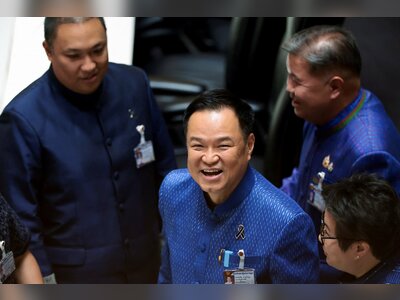
In statements to the press, Deputy Prime Minister and Finance Minister Pichai Chunhavajira emphasised that uniform treatment across major Southeast Asian exporters means Thailand can navigate either legal scenario without a significant shift in its market position.
Government negotiators continue technical-level discussions with U.S. counterparts while awaiting the court’s ruling.
For Thai exporters, especially in sectors like electronics, auto parts and agricultural products that rely on stable access to the U.S. market, the Supreme Court ruling holds importance not just for future tariff policy but also for broader investor confidence.
A ruling that affirms the legality of Trump-era reciprocal tariffs could solidify the bilateral trade framework, while a decision limiting executive tariff authority might prompt fresh negotiations or adjustments in how Washington and Bangkok manage trade relations in an evolving global economic landscape.
The 19 per cent tariff rate was secured through intensive talks in mid-2025, bringing U.S. duties on Thai goods into parity with those applied to neighbours such as Indonesia, Malaysia and the Philippines.
The deal was welcomed domestically as a diplomatic and economic success, preserving Thailand’s competitiveness in global markets and reaffirming the strong bilateral relationship with the United States.
However, the broader legal framework under which these reciprocal tariffs were introduced — originating from a Trump administration policy to rebalance trade deficits — is now before the U.S. Supreme Court.
A federal appellate ruling had previously questioned the scope of presidential tariff authority, and the Supreme Court’s forthcoming judgment could either uphold or limit the executive’s power in trade policy.
The timing of the decision remains unclear, as the court does not announce rulings in advance, but it is widely anticipated as one of the landmark trade law cases of the year.
Thai officials have said the Supreme Court outcome would not fundamentally alter Thailand’s tariff competitiveness because the 19 per cent rate matches those of many of its export rivals.
In statements to the press, Deputy Prime Minister and Finance Minister Pichai Chunhavajira emphasised that uniform treatment across major Southeast Asian exporters means Thailand can navigate either legal scenario without a significant shift in its market position.
Government negotiators continue technical-level discussions with U.S. counterparts while awaiting the court’s ruling.
For Thai exporters, especially in sectors like electronics, auto parts and agricultural products that rely on stable access to the U.S. market, the Supreme Court ruling holds importance not just for future tariff policy but also for broader investor confidence.
A ruling that affirms the legality of Trump-era reciprocal tariffs could solidify the bilateral trade framework, while a decision limiting executive tariff authority might prompt fresh negotiations or adjustments in how Washington and Bangkok manage trade relations in an evolving global economic landscape.