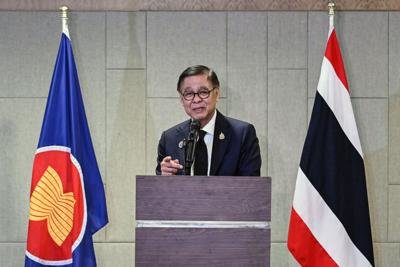
Thailand Sets Firm Preconditions as Four Days of Border Peace Talks with Cambodia Begin
Bangkok outlines technical and operational demands ahead of key bilateral negotiations aimed at halting deadly clashes along the shared border
Thailand has outlined a series of firm preconditions as a four-day round of ceasefire and peace negotiations with Cambodia commenced on December twenty-four in Chanthaburi province, signalling Bangkok’s intent to secure a durable and enforceable agreement in the face of ongoing border hostilities.
The General Border Committee meeting, the first bilateral dialogue since clashes erupted on December seventh, is scheduled to conclude with a defence ministers’ meeting on December twenty-seven, where any formal agreement would be considered.
According to the Thai Ministry of Defence, progress in the secretariat-level discussions will determine whether the defence ministers’ session can proceed, with Bangkok stating it will not advance or sign any deal unless key technical frameworks are resolved.
Central among Thailand’s demands are clear protocols on troop deployments, operational procedures and methods to protect civilians and infrastructure from military action.
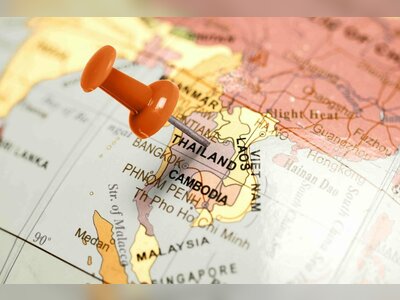
The Thai side also plans to raise concerns about the use of civilian buildings for military purposes, the firing of heavy weapons from populated areas, and the stability of contested sectors of the approximately eight-hundred-kilometre border.
Thailand has insisted on hosting the talks within its territory, rejecting Cambodia’s request to relocate the meeting to a neutral venue such as Kuala Lumpur.
The negotiations unfold against a backdrop of intensified fighting that has claimed dozens of lives and displaced hundreds of thousands of civilians on both sides, with artillery exchanges and rocket fire reported in border provinces.
Previous efforts to sustain a ceasefire—first brokered in October under the auspices of the Association of Southeast Asian Nations and with support from external partners—collapsed, prompting renewed diplomatic engagement this month.
Thailand’s foreign minister emphasised the need for substantive, action-oriented dialogue rather than mere statements of intent, underscoring Bangkok’s insistence that ceasefire implementation must be verified through concrete steps on the ground.
Alongside diplomatic manoeuvres, military and humanitarian pressures persist, as the border conflict continues to affect local economies, infrastructure and cross-border movement.
Both sides face mounting international and regional calls for de-escalation, with ASEAN and other partners urging restraint and a quick return to peace.
How these four days of negotiations address Thailand’s technical demands and Cambodia’s positions will shape the immediate prospects for a sustainable truce and the longer-term dynamics of bilateral relations in the region.
The General Border Committee meeting, the first bilateral dialogue since clashes erupted on December seventh, is scheduled to conclude with a defence ministers’ meeting on December twenty-seven, where any formal agreement would be considered.
According to the Thai Ministry of Defence, progress in the secretariat-level discussions will determine whether the defence ministers’ session can proceed, with Bangkok stating it will not advance or sign any deal unless key technical frameworks are resolved.
Central among Thailand’s demands are clear protocols on troop deployments, operational procedures and methods to protect civilians and infrastructure from military action.
The Thai side also plans to raise concerns about the use of civilian buildings for military purposes, the firing of heavy weapons from populated areas, and the stability of contested sectors of the approximately eight-hundred-kilometre border.
Thailand has insisted on hosting the talks within its territory, rejecting Cambodia’s request to relocate the meeting to a neutral venue such as Kuala Lumpur.
The negotiations unfold against a backdrop of intensified fighting that has claimed dozens of lives and displaced hundreds of thousands of civilians on both sides, with artillery exchanges and rocket fire reported in border provinces.
Previous efforts to sustain a ceasefire—first brokered in October under the auspices of the Association of Southeast Asian Nations and with support from external partners—collapsed, prompting renewed diplomatic engagement this month.
Thailand’s foreign minister emphasised the need for substantive, action-oriented dialogue rather than mere statements of intent, underscoring Bangkok’s insistence that ceasefire implementation must be verified through concrete steps on the ground.
Alongside diplomatic manoeuvres, military and humanitarian pressures persist, as the border conflict continues to affect local economies, infrastructure and cross-border movement.
Both sides face mounting international and regional calls for de-escalation, with ASEAN and other partners urging restraint and a quick return to peace.
How these four days of negotiations address Thailand’s technical demands and Cambodia’s positions will shape the immediate prospects for a sustainable truce and the longer-term dynamics of bilateral relations in the region.