Calm Prevails Along Cambodia-Thailand Border After New Ceasefire Holds
Fresh truce brings an end to weeks of deadly clashes and raises hopes for lasting peace following sustained diplomatic efforts
Tension along the Cambodia-Thailand border has eased markedly after a newly signed ceasefire took effect, bringing a halt to weeks of intense fighting that claimed the lives of more than a hundred people and forced hundreds of thousands from their homes.
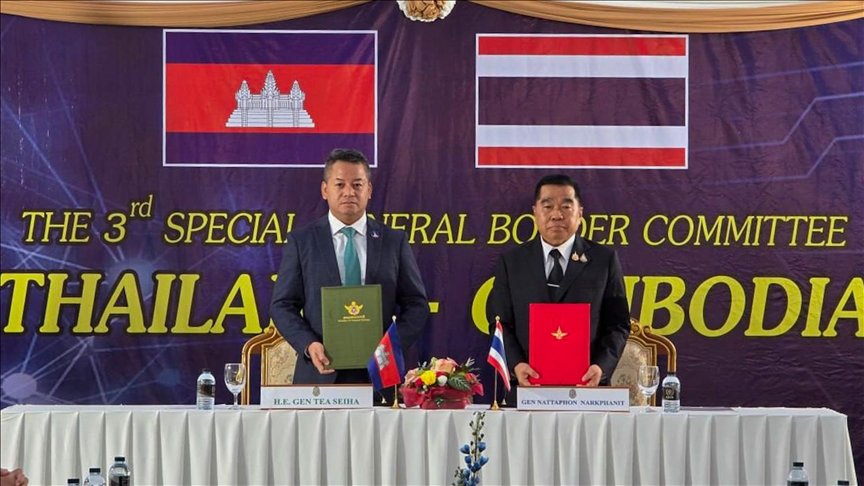
The latest agreement, signed by the defence ministers of both nations, entered into force at midday local time and has so far seen no reported gunfire or major hostilities, signalling a fragile but notable respite in a long-running territorial dispute.
The accord calls for both sides to maintain current troop positions and refrain from further movement of armed forces, and includes cooperative measures such as de-mining and agreements on humanitarian issues.
A key provision of the arrangement is the planned release of Cambodian soldiers held by Thailand if the truce holds for at least seventy-two hours, a step that could further reduce tensions and build confidence between the neighbours.
The ceasefire followed weeks of fighting that reignited in early December after a previous truce brokered in July collapsed.
The conflict involved ground engagements, artillery exchanges and airstrikes, causing significant casualties on both sides and displacing civilians from communities along the disputed frontier.
International actors, including members of the Association of Southeast Asian Nations and diplomatic partners, welcomed the ceasefire and called for continued dialogue to solidify peace and security in the region.
Top diplomats from Thailand and Cambodia are set to meet in southwestern China to discuss ways to reinforce the ceasefire and resume normal exchanges, with Chinese officials highlighting the importance of enhancing mutual understanding and cooperation.
Regional leaders have underscored that sustained diplomacy and adherence to the terms of the truce will be essential for translating the current calm into longer-term stability, ensuring that displaced civilians can return home and that the legacy of conflict gives way to renewed cooperation.
The latest agreement, signed by the defence ministers of both nations, entered into force at midday local time and has so far seen no reported gunfire or major hostilities, signalling a fragile but notable respite in a long-running territorial dispute.
The accord calls for both sides to maintain current troop positions and refrain from further movement of armed forces, and includes cooperative measures such as de-mining and agreements on humanitarian issues.
A key provision of the arrangement is the planned release of Cambodian soldiers held by Thailand if the truce holds for at least seventy-two hours, a step that could further reduce tensions and build confidence between the neighbours.
The ceasefire followed weeks of fighting that reignited in early December after a previous truce brokered in July collapsed.
The conflict involved ground engagements, artillery exchanges and airstrikes, causing significant casualties on both sides and displacing civilians from communities along the disputed frontier.
International actors, including members of the Association of Southeast Asian Nations and diplomatic partners, welcomed the ceasefire and called for continued dialogue to solidify peace and security in the region.
Top diplomats from Thailand and Cambodia are set to meet in southwestern China to discuss ways to reinforce the ceasefire and resume normal exchanges, with Chinese officials highlighting the importance of enhancing mutual understanding and cooperation.
Regional leaders have underscored that sustained diplomacy and adherence to the terms of the truce will be essential for translating the current calm into longer-term stability, ensuring that displaced civilians can return home and that the legacy of conflict gives way to renewed cooperation.