Thailand and Cambodia Agree to Ceasefire and Begin Consolidation Following China-Facilitated Talks
Senior diplomats from Thailand, Cambodia and China confirm a ceasefire and mutual intent to rebuild trust after weeks of deadly border clashes.
Thailand and Cambodia have agreed to halt hostilities and work toward consolidating a ceasefire following weeks of intense clashes along their shared border, in a development facilitated by China as a diplomatic broker.
The agreement, reached in Yunnan province during meetings involving top diplomats from all three countries, reflects a concerted effort to end fighting that has claimed at least one hundred lives and displaced more than half a million people.
The ceasefire, which took effect on December 27, marks the second major pause in hostilities this year.
It follows the collapse of an earlier truce and signs renewed commitment from both sides to pursue dialogue and de-escalation.
Chinese Foreign Minister Wang Yi described the ceasefire as “hard-won,” emphasising China’s role in encouraging continuous engagement and the restoration of peace and stability in the region.
He urged both Thailand and Cambodia not to allow violence to resume and to pursue gradual rebuilding of mutual trust.
In a joint communique released by China’s official media, the three parties stressed the importance of maintaining the ceasefire and resuming normal exchanges.
The document underscores a shared commitment to preventing a resurgence of violence, even as detailed mechanisms for long-term resolution remain under negotiation.
Notably, ASEAN’s role was not highlighted in this statement, focusing instead on the trilateral cooperation with Beijing’s active participation.
Separately, China welcomed the truce and reaffirmed its willingness to provide humanitarian assistance to address the needs of displaced civilians affected by the conflict.
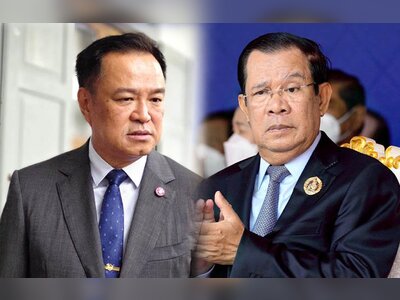
In preparatory meetings leading up to the joint announcement, China hosted discussions between Cambodian Foreign Minister Prak Sokhonn and Thai Foreign Minister Sihasak Phuangketkeow, underlining Beijing’s aspiration to be an influential stakeholder in stabilising regional tensions.
The conflict along the Thailand-Cambodia border stems from long-standing territorial disputes, and although the immediate ceasefire has paused open warfare, both sides face the complex task of rebuilding political trust and laying the groundwork for durable peace.
The diplomatic breakthrough facilitated by China suggests a rising role for Beijing in Southeast Asian security affairs, even as broader geopolitical interests and historical grievances continue to shape relations between the neighbouring states.
The agreement, reached in Yunnan province during meetings involving top diplomats from all three countries, reflects a concerted effort to end fighting that has claimed at least one hundred lives and displaced more than half a million people.
The ceasefire, which took effect on December 27, marks the second major pause in hostilities this year.
It follows the collapse of an earlier truce and signs renewed commitment from both sides to pursue dialogue and de-escalation.
Chinese Foreign Minister Wang Yi described the ceasefire as “hard-won,” emphasising China’s role in encouraging continuous engagement and the restoration of peace and stability in the region.
He urged both Thailand and Cambodia not to allow violence to resume and to pursue gradual rebuilding of mutual trust.
In a joint communique released by China’s official media, the three parties stressed the importance of maintaining the ceasefire and resuming normal exchanges.
The document underscores a shared commitment to preventing a resurgence of violence, even as detailed mechanisms for long-term resolution remain under negotiation.
Notably, ASEAN’s role was not highlighted in this statement, focusing instead on the trilateral cooperation with Beijing’s active participation.
Separately, China welcomed the truce and reaffirmed its willingness to provide humanitarian assistance to address the needs of displaced civilians affected by the conflict.
In preparatory meetings leading up to the joint announcement, China hosted discussions between Cambodian Foreign Minister Prak Sokhonn and Thai Foreign Minister Sihasak Phuangketkeow, underlining Beijing’s aspiration to be an influential stakeholder in stabilising regional tensions.
The conflict along the Thailand-Cambodia border stems from long-standing territorial disputes, and although the immediate ceasefire has paused open warfare, both sides face the complex task of rebuilding political trust and laying the groundwork for durable peace.
The diplomatic breakthrough facilitated by China suggests a rising role for Beijing in Southeast Asian security affairs, even as broader geopolitical interests and historical grievances continue to shape relations between the neighbouring states.