Thailand-Iran Trade Falters as Exports Dip and Oil Price Risks Mount
Thai exports to Iran fall in early 2025 amid broader economic headwinds and rising concern over global oil price shocks
Thailand’s trade relationship with Iran has shown a measurable downturn in 2025, with exports to Tehran declining by around one point two eight percent in the year to date, reflecting both subdued demand and broader pressures on Thai external commerce.
This contraction comes as Thailand’s export engine navigates a more challenging global environment marked by tariff pressures, currency strength and geopolitical volatility.
Alongside the drop in goods shipments to Iran, anchoring concerns have intensified over energy markets as tensions involving Iran, Israel and wider Middle East volatility risk further upward pressure on crude oil prices and add another layer of uncertainty to Thailand’s import bills and inflation dynamics.
Thai commerce officials report that slower export performance to Iran mirrors weakening patterns in other non-traditional or secondary markets, even as major destinations like the United States and China remain dominant for Thai merchandise.
The slight contraction in shipments to Iran fits within a broader pattern of export growth moderation in 2025, which has seen Thailand’s external sales challenged by stronger regional currencies and tightening foreign demand for certain industrial products.
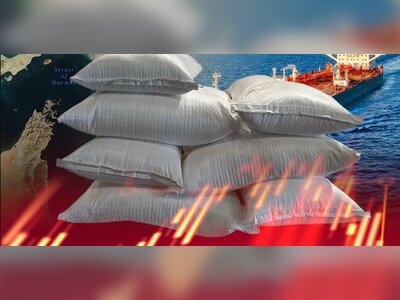
At the same time, Southeast Asian economies including Thailand are watching developments around the Strait of Hormuz, a strategic chokepoint through which about one-fifth of the world’s crude oil supply flows.
Iranian threats to close the waterway in response to military escalation have fuelled global energy price volatility, with crude benchmarks periodically rising sharply on fears of supply disruption.
Such price gyrations carry implications for Thailand’s import costs and consumer energy prices, given the kingdom’s reliance on imported oil and refined fuels.
The Thai government and its Energy Department have assured markets that domestic fuel reserves and supply chains remain resilient, but officials acknowledge that sustained high crude prices could transfer into higher costs for businesses and households.
This is especially pertinent as Thailand’s export sectors, including food processing, electronics and automotive parts, contend with external headwinds and seek to diversify export relationships.
Government strategies to broaden market access and enhance competitiveness include active pursuit of free trade agreements and trade missions to emerging economies, aiming to offset slowing demand in select markets such as Iran.
Economic analysts note that while the one point two eight percent decline in exports to Iran is modest in isolation, it underscores the fragility of Thailand’s trade amidst overlapping pressures — from Middle East geopolitics and oil price risk to global tariff shifts — and highlights the importance of diversification and resilient supply strategies for the kingdom’s export-oriented economy.
This contraction comes as Thailand’s export engine navigates a more challenging global environment marked by tariff pressures, currency strength and geopolitical volatility.
Alongside the drop in goods shipments to Iran, anchoring concerns have intensified over energy markets as tensions involving Iran, Israel and wider Middle East volatility risk further upward pressure on crude oil prices and add another layer of uncertainty to Thailand’s import bills and inflation dynamics.
Thai commerce officials report that slower export performance to Iran mirrors weakening patterns in other non-traditional or secondary markets, even as major destinations like the United States and China remain dominant for Thai merchandise.
The slight contraction in shipments to Iran fits within a broader pattern of export growth moderation in 2025, which has seen Thailand’s external sales challenged by stronger regional currencies and tightening foreign demand for certain industrial products.
At the same time, Southeast Asian economies including Thailand are watching developments around the Strait of Hormuz, a strategic chokepoint through which about one-fifth of the world’s crude oil supply flows.
Iranian threats to close the waterway in response to military escalation have fuelled global energy price volatility, with crude benchmarks periodically rising sharply on fears of supply disruption.
Such price gyrations carry implications for Thailand’s import costs and consumer energy prices, given the kingdom’s reliance on imported oil and refined fuels.
The Thai government and its Energy Department have assured markets that domestic fuel reserves and supply chains remain resilient, but officials acknowledge that sustained high crude prices could transfer into higher costs for businesses and households.
This is especially pertinent as Thailand’s export sectors, including food processing, electronics and automotive parts, contend with external headwinds and seek to diversify export relationships.
Government strategies to broaden market access and enhance competitiveness include active pursuit of free trade agreements and trade missions to emerging economies, aiming to offset slowing demand in select markets such as Iran.
Economic analysts note that while the one point two eight percent decline in exports to Iran is modest in isolation, it underscores the fragility of Thailand’s trade amidst overlapping pressures — from Middle East geopolitics and oil price risk to global tariff shifts — and highlights the importance of diversification and resilient supply strategies for the kingdom’s export-oriented economy.