ASEAN Steps Up Diplomatic Engagement as Thailand-Cambodia Border Conflict Escalates
Southeast Asian foreign ministers convene emergency talks and deploy observer teams to ease intense fighting and resume ceasefire efforts between Bangkok and Phnom Penh
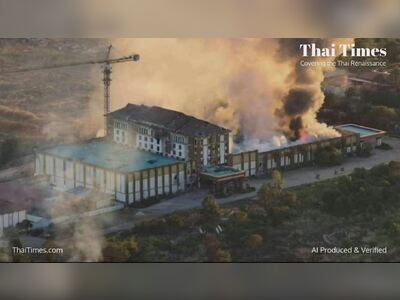
Southeast Asian leaders through the Association of Southeast Asian Nations have intervened diplomatically as clashes between Thailand and Cambodia along their shared border continued into December, resulting in significant casualties, mass displacement and heightened regional concern.
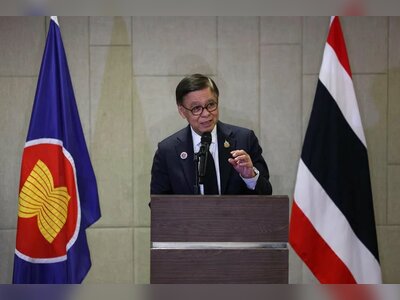
In response to more than two weeks of renewed hostilities that have killed dozens on both sides and forced hundreds of thousands from their homes, ASEAN foreign ministers held a special meeting in Kuala Lumpur to seek ways to revive a ceasefire and prevent further escalation.
The gathering marked the first direct high-level engagement since the outbreak of hostilities in early December, after a previous peace accord mediated by ASEAN chair Malaysia and supported by the United States collapsed.
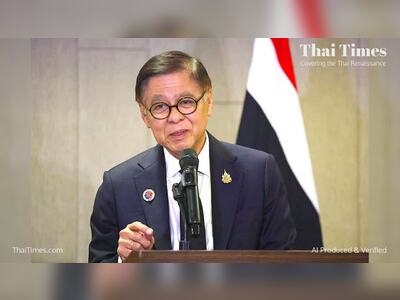
ASEAN ministers expressed serious concern at the violence and urged both nations to exercise maximum restraint, return to dialogue and halt all forms of hostilities to protect civilians.
In a conjoint initiative aimed at fostering de-escalation, Thailand and Cambodia have agreed to the deployment of an ASEAN observer team along the disputed frontier to monitor conditions, support communications and create space for confidence-building measures.
Malaysia’s prime minister, whose country currently holds the ASEAN chair, announced that the operation would be led by senior defence officials and deployed in the coming days ahead of a planned ceasefire meeting.
ASEAN’s engagement reflects a calibrated approach consistent with its foundational principles of peaceful dispute resolution and respect for sovereignty, while acknowledging the urgent need to address the conflict’s humanitarian and security implications.
The bloc’s intervention has also drawn intensified diplomatic support from external partners.
A U.S. diplomatic push within ASEAN has sought to bolster efforts toward a durable truce, while China has publicly called for an immediate ceasefire and offered its support for renewed dialogue.
Both Bangkok and Phnom Penh have accepted ASEAN’s role as a facilitator of talks, with scheduled meetings aimed at detailed negotiations toward implementation and verification of a ceasefire agreement.
Regional observers view the combined diplomatic efforts as critical to halting active artillery exchanges, air strikes and other combat operations, and to laying the groundwork for longer-term stability along the frontier.
ASEAN’s stepped-up involvement underscores the organisation’s evolving role in managing member state disputes and its commitment to maintaining peace and security in Southeast Asia.
In response to more than two weeks of renewed hostilities that have killed dozens on both sides and forced hundreds of thousands from their homes, ASEAN foreign ministers held a special meeting in Kuala Lumpur to seek ways to revive a ceasefire and prevent further escalation.
The gathering marked the first direct high-level engagement since the outbreak of hostilities in early December, after a previous peace accord mediated by ASEAN chair Malaysia and supported by the United States collapsed.
ASEAN ministers expressed serious concern at the violence and urged both nations to exercise maximum restraint, return to dialogue and halt all forms of hostilities to protect civilians.
In a conjoint initiative aimed at fostering de-escalation, Thailand and Cambodia have agreed to the deployment of an ASEAN observer team along the disputed frontier to monitor conditions, support communications and create space for confidence-building measures.
Malaysia’s prime minister, whose country currently holds the ASEAN chair, announced that the operation would be led by senior defence officials and deployed in the coming days ahead of a planned ceasefire meeting.
ASEAN’s engagement reflects a calibrated approach consistent with its foundational principles of peaceful dispute resolution and respect for sovereignty, while acknowledging the urgent need to address the conflict’s humanitarian and security implications.
The bloc’s intervention has also drawn intensified diplomatic support from external partners.
A U.S. diplomatic push within ASEAN has sought to bolster efforts toward a durable truce, while China has publicly called for an immediate ceasefire and offered its support for renewed dialogue.
Both Bangkok and Phnom Penh have accepted ASEAN’s role as a facilitator of talks, with scheduled meetings aimed at detailed negotiations toward implementation and verification of a ceasefire agreement.
Regional observers view the combined diplomatic efforts as critical to halting active artillery exchanges, air strikes and other combat operations, and to laying the groundwork for longer-term stability along the frontier.
ASEAN’s stepped-up involvement underscores the organisation’s evolving role in managing member state disputes and its commitment to maintaining peace and security in Southeast Asia.