Thailand’s Gulf Development Secures Second Long-Term LNG Supply Agreement to Strengthen Energy Security
Italian energy major Eni commits a decade-long liquefied natural gas supply contract with Gulf to support Thailand’s growing gas-fired power demand
Thailand’s Gulf Development Company has signed a second long-term liquefied natural gas (LNG) supply agreement, reinforcing the country’s strategy to diversify energy sources and bolster long-term supply security.
The new contract, agreed with Italian energy firm Eni, will see Gulf receive up to 0.8 million tonnes per annum of LNG over a ten-year period, with deliveries scheduled to begin in early 2027. This deal complements Thailand’s broader push to reduce reliance on domestic gas and coal output and to meet rising demand for flexible and cleaner fuel sources in the power sector.
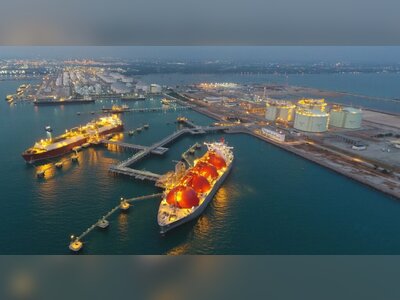
Under the terms of the agreement, the LNG cargoes will be delivered to Thailand’s regasification terminals where the fuel will be converted back into gaseous form for use in generating electricity and supporting industrial consumption.
Gulf Development, a leading private power producer in Thailand, views the long-term arrangement as pivotal to stabilising fuel price and volume availability over the coming decade, providing a reliable foundation for its expanding portfolio of gas-fired power plants.
The Eni-Gulf contract builds on a prior shorter-term LNG supply relationship that began under a two-year arrangement signed in 2024, under which Eni committed to deliver approximately 0.5 million tonnes per year starting in 2025. The expanded ten-year commitment marks Eni’s first long-term LNG supply contract in Thailand and aligns with its strategy to broaden its global footprint in high-growth Asian markets and diversify its customer base.
Eni also aims to grow its global LNG portfolio to around 20 million tonnes per annum by 2030, leveraging projects across Africa, Southeast Asia, the United States and other regions.
Officials from Gulf and Thailand’s energy sector have emphasised that long-duration LNG contracts form a core element of the nation’s energy transition plan, enabling greater security of supply while facilitating a gradual shift away from more carbon-intensive fuels.
The agreement also underscores Thailand’s role as a key rising importer of LNG in Southeast Asia, a region witnessing robust demand growth for natural gas as economies expand and environmental policies shift toward lower emissions.
The deal is seen as a cornerstone in Thailand’s effort to ensure reliable energy infrastructure and to support sustainable economic development in the years ahead.
The new contract, agreed with Italian energy firm Eni, will see Gulf receive up to 0.8 million tonnes per annum of LNG over a ten-year period, with deliveries scheduled to begin in early 2027. This deal complements Thailand’s broader push to reduce reliance on domestic gas and coal output and to meet rising demand for flexible and cleaner fuel sources in the power sector.
Under the terms of the agreement, the LNG cargoes will be delivered to Thailand’s regasification terminals where the fuel will be converted back into gaseous form for use in generating electricity and supporting industrial consumption.
Gulf Development, a leading private power producer in Thailand, views the long-term arrangement as pivotal to stabilising fuel price and volume availability over the coming decade, providing a reliable foundation for its expanding portfolio of gas-fired power plants.
The Eni-Gulf contract builds on a prior shorter-term LNG supply relationship that began under a two-year arrangement signed in 2024, under which Eni committed to deliver approximately 0.5 million tonnes per year starting in 2025. The expanded ten-year commitment marks Eni’s first long-term LNG supply contract in Thailand and aligns with its strategy to broaden its global footprint in high-growth Asian markets and diversify its customer base.
Eni also aims to grow its global LNG portfolio to around 20 million tonnes per annum by 2030, leveraging projects across Africa, Southeast Asia, the United States and other regions.
Officials from Gulf and Thailand’s energy sector have emphasised that long-duration LNG contracts form a core element of the nation’s energy transition plan, enabling greater security of supply while facilitating a gradual shift away from more carbon-intensive fuels.
The agreement also underscores Thailand’s role as a key rising importer of LNG in Southeast Asia, a region witnessing robust demand growth for natural gas as economies expand and environmental policies shift toward lower emissions.
The deal is seen as a cornerstone in Thailand’s effort to ensure reliable energy infrastructure and to support sustainable economic development in the years ahead.