Southeast Asia Enters Pivotal Election Year Amid Rising Public Trust and Economic Pressures
Contests from Myanmar to Thailand and Laos reflect broader tests of governance, public confidence and economic uncertainty in 2026
A series of consequential elections across Southeast Asia in two thousand twenty-six are emerging as key tests of public trust in governance and the resilience of regional economies amid persistent uncertainty.
From Myanmar’s contested polls unfolding under a military junta to Thailand’s scheduled general election and parliamentary votes in Laos, the political calendar underscores shifting domestic priorities against a backdrop of economic headwinds and social demands.
In Myanmar, successive phases of voting for the first general election since the two thousand twenty-one coup have begun, with ballots cast in late December and continuing through January.
The military government has framed the election as a step toward restoring civilian governance, yet critics both inside the country and abroad characterise the process as deeply flawed and restricted, with prominent opposition figures barred from participation and significant portions of the electorate unable to vote due to ongoing conflict.
These dynamics have prompted regional observers, including the Association of Southeast Asian Nations, to monitor developments closely, assessing implications for stability and humanitarian conditions as the process unfolds.
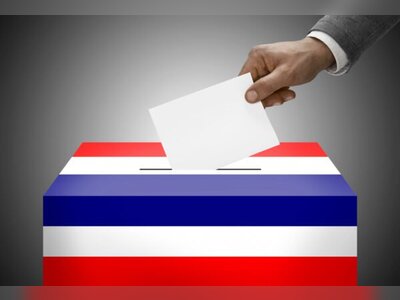
Thailand is poised for a major electoral moment on February eighth, when general elections will take place amid heightened public scrutiny of economic performance, border security concerns and institutional trust.
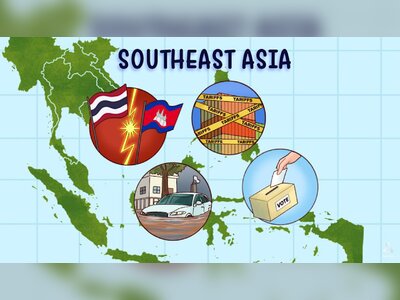
The campaign reflects deep debates over national priorities, including border tensions with Cambodia and domestic economic expectations, with voters weighing continuity against demands for reform.
Policymakers in Bangkok have also highlighted efforts to address transnational crime and economic resilience as part of broader governance discussions ahead of polling.
Elsewhere in the region, Laos has scheduled a parliamentary election on February twenty-second, part of its regular political cycle, although the ruling Lao People’s Revolutionary Party remains dominant in a system without significant opposition challenges.
Observers note that while the electoral framework differs from multi-party contexts, the vote nevertheless serves as a barometer of public sentiment in one-party governance and gauges citizen engagement amid economic objectives.
Beyond formal voting, other Southeast Asian states such as Malaysia and Indonesia are expected to face electoral tests in state or local polls that will probe coalition stability and leadership performance in the face of fiscal pressures, trade volatility and lingering global uncertainties.
Analysts say these contests collectively reflect a region navigating the intersection of democratic aspirations, economic pressures and evolving public expectations, underscoring how two thousand twenty-six will be a defining year for public trust and political legitimacy across Southeast Asia.
From Myanmar’s contested polls unfolding under a military junta to Thailand’s scheduled general election and parliamentary votes in Laos, the political calendar underscores shifting domestic priorities against a backdrop of economic headwinds and social demands.
In Myanmar, successive phases of voting for the first general election since the two thousand twenty-one coup have begun, with ballots cast in late December and continuing through January.
The military government has framed the election as a step toward restoring civilian governance, yet critics both inside the country and abroad characterise the process as deeply flawed and restricted, with prominent opposition figures barred from participation and significant portions of the electorate unable to vote due to ongoing conflict.
These dynamics have prompted regional observers, including the Association of Southeast Asian Nations, to monitor developments closely, assessing implications for stability and humanitarian conditions as the process unfolds.
Thailand is poised for a major electoral moment on February eighth, when general elections will take place amid heightened public scrutiny of economic performance, border security concerns and institutional trust.
The campaign reflects deep debates over national priorities, including border tensions with Cambodia and domestic economic expectations, with voters weighing continuity against demands for reform.
Policymakers in Bangkok have also highlighted efforts to address transnational crime and economic resilience as part of broader governance discussions ahead of polling.
Elsewhere in the region, Laos has scheduled a parliamentary election on February twenty-second, part of its regular political cycle, although the ruling Lao People’s Revolutionary Party remains dominant in a system without significant opposition challenges.
Observers note that while the electoral framework differs from multi-party contexts, the vote nevertheless serves as a barometer of public sentiment in one-party governance and gauges citizen engagement amid economic objectives.
Beyond formal voting, other Southeast Asian states such as Malaysia and Indonesia are expected to face electoral tests in state or local polls that will probe coalition stability and leadership performance in the face of fiscal pressures, trade volatility and lingering global uncertainties.
Analysts say these contests collectively reflect a region navigating the intersection of democratic aspirations, economic pressures and evolving public expectations, underscoring how two thousand twenty-six will be a defining year for public trust and political legitimacy across Southeast Asia.